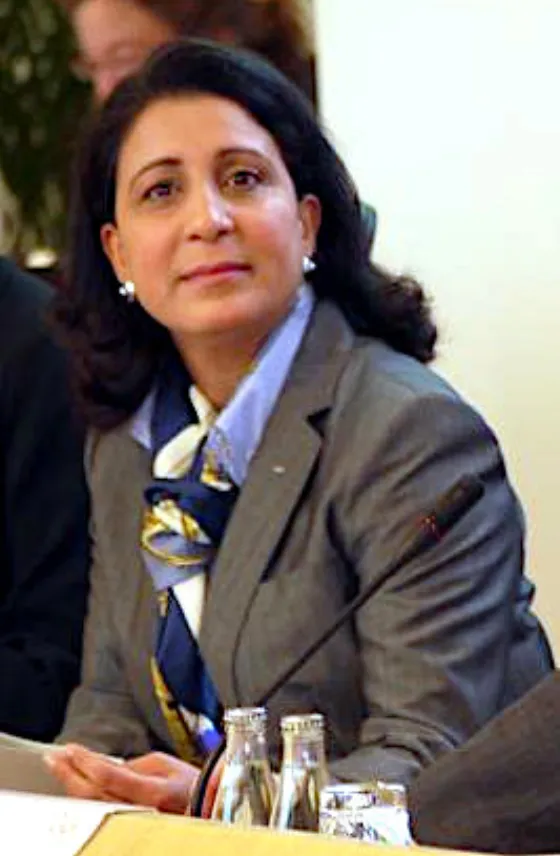
The Achievement
On August 8, 1984, Nawal El Moutawakel of Morocco crossed the finish line at the Los Angeles Memorial Coliseum in 54.61 seconds. She had just won the women's 400-meter hurdles at the Summer Olympics, and she had done it by more than half a second.
The numbers stacked up fast. She was the first woman from a Muslim-majority country to win an Olympic gold medal. The first African woman to win Olympic gold in any event. The first Moroccan Olympic champion of either sex. And the first winner of an event making its Olympic debut: the women's 400m hurdles had never been part of the Games before that August afternoon in Los Angeles.
Four of her competitors had no idea a new chapter in sports history was being written around them. Behind El Moutawakel, American Judi Brown took silver. Romanian Cristieana Cojocaru edged India's P. T. Usha for bronze by a single hundredth of a second (55.41 to 55.42), one of the closest photo-finish splits in Olympic history. The woman who won had finished more than a second clear of that bronze-medal battle. She was in a different race.
The 22-year-old from Casablanca had trained at Iowa State University on an athletic scholarship, recruited by coaches Pat Moynihan and Ron Renko to run for the Cyclones. She had arrived in Ames, Iowa in 1983. The following summer she was an Olympic champion.
The Muhammad Ali Question
Any serious treatment of the "first Muslim Olympic gold medalist" question has to address Muhammad Ali. The answer is cleaner than the internet generally suggests.
Cassius Clay won the light heavyweight boxing gold medal at the 1960 Rome Olympics. He was 18, unbeaten as an amateur, and already the kind of fighter who made crowds stop and watch. It was one of the great Olympic performances of the 20th century.
He was not Muslim. He converted to Islam in early 1964, roughly two days after defeating Sonny Liston for the world heavyweight championship on February 25, 1964. On March 6, 1964, Elijah Muhammad of the Nation of Islam gave him the name Muhammad Ali. That conversion came four years after his Olympic gold medal.
There is additional complexity worth noting: the Nation of Islam that Ali joined in 1964 was not universally regarded by mainstream Sunni Muslims as orthodox Islam at the time. Ali later converted to Sunni Islam in 1975, and eventually to Sufism. His Islamic identity evolved considerably over his life. But the relevant fact for the historical record is straightforward: Cassius Clay, not yet Muslim, won Olympic gold in 1960. Muhammad Ali, the Muslim, had no Olympic gold medal to his name.
Earlier Muslim Gold Medalists
The history of Muslim men winning Olympic gold predates El Moutawakel by more than half a century. The earliest strong candidate is El-Sayed Mohammed Nosseir, an Egyptian weightlifter born in Tanta in 1905. He won gold in the light heavyweight category at the 1928 Amsterdam Olympics, setting world records in both the snatch (112.5 kg) and the total (355 kg). It was Egypt's first Olympic gold medal.
Nosseir's name carries the honorific "El-Sayed," a title associated in Egypt with respected men of religious lineage, and Egypt was (and remains) an overwhelmingly Muslim country. No source explicitly documents his personal religious practice, which is typical for athletes of that era. But his Egyptian identity, his name, and the historical context make Muslim background highly probable. He is the earliest plausible Muslim Olympic gold medalist on record.
Other early cases from Muslim-majority nations: Turkey's Yasar Erkan won gold in Greco-Roman wrestling at the 1936 Berlin Olympics, becoming Turkey's first-ever Olympic champion. Iran's Emamali Habibi won gold in freestyle wrestling at the 1956 Melbourne Olympics, Iran's first gold medal. As with Nosseir, the historical record documents nationality and name but not personal religious practice.
What makes El Moutawakel's 1984 achievement distinct is both its precision and its documentation. She is the first Muslim woman to win gold, a claim that is unambiguous, universally corroborated by the IOC, World Athletics, and Olympics.com, and represents a genuinely different barrier than the ones broken by men before her.
Life Before the Olympics
Nawal El Moutawakel was born on April 15, 1962, in Casablanca. Athletics ran in the family. Her father was a judoka. Her mother played volleyball. Her siblings competed too. She began running at 14, starting with cross-country before progressing to sprints and eventually the hurdles.
The path to Los Angeles ran through Iowa. In 1983, she traveled to the United States to attend Iowa State University in Ames on an athletic scholarship. The Cyclone women's track program had recruited her sight unseen. She studied physical education and physiotherapy, eventually graduating with a BS in 1988. In 1984, just months after arriving on campus, she won the NCAA title in the 400m hurdles. Then she went to the Olympics.
She was the only woman in Morocco's Los Angeles delegation that summer. Not just the only female track athlete. The only female athlete, period.
She was not the pre-race favorite. That distinction belonged to American Judi Brown, and Sweden's Ann-Louise Skoglund had posted the fastest semifinal time of 55.17. El Moutawakel took control around the halfway point, built a lead over the back straight, and never gave it up. When she crossed the line, Brown was still 0.6 seconds behind her.
King Hassan II was watching from Morocco, where the time difference meant it was the early hours of the morning. He called her immediately. Then he issued a decree: all girls born in Morocco on August 8, 1984 were to be named Nawal. Not one child. Every girl born in Morocco that day. The story became national legend.
Impact on Women's Sports
El Moutawakel's gold sparked something in Moroccan athletics that took years to fully show itself. She returned home in 1989, joined the Ministry of Sport and Youth as an inspector, and became the national sprint and hurdle coach. In 1993, she organized the first women's road race in Casablanca, a 5km run. It attracted a modest field. Over the following decades it grew to 30,000 participants, making it one of the largest women's-only road races held in any Muslim-majority country.
Moroccan women became regular presences at subsequent Olympics. Nezha Bidouane won the 400m hurdles gold at the 1997 and 2001 World Championships. Hasna Benhassi won 800m silver at the 2004 Athens Games. The path El Moutawakel opened in 1984 was not metaphorical; it was literal, measurable in the careers of the athletes who followed her.
The ripple reached beyond Morocco. Ghada Shouaa of Syria won heptathlon gold at the 1996 Atlanta Olympics. Habiba Ghribi of Tunisia won 3000m steeplechase silver at London 2012 and gold at two World Championships. Arab women had been essentially absent from Olympic medal podiums before 1984. That absence ended in Los Angeles.
The most significant downstream effect came in 2012. Saudi Arabia, under pressure from the IOC, sent female athletes to an Olympic Games for the first time: judoka Wojdan Shaherkani and 800m runner Sarah Attar. Qatar and Brunei also sent female athletes for the first time that year. London 2012 was the first Olympics where every participating national team included at least one woman. El Moutawakel, by that point an IOC Vice-President, was part of the institutional framework that produced that outcome.
Post-Competition Legacy
The competitive career ended. The influence did not.
El Moutawakel's government appointments began in the late 1990s. She served as Secretary of State to the Minister of Social Affairs from 1997 to 1998, then as full Minister of Youth and Sports from 2007 to 2009. On the international stage, her trajectory ran in parallel. She was elected to the International Association of Athletics Federations council in 1995. In 1998, she became the first Muslim woman and first Arab woman elected to the International Olympic Committee.
Her IOC roles carried weight beyond ceremonial significance. She chaired the Evaluation Commission for the 2012 Olympic host city selection, presiding over the process that chose London over Paris, New York, Moscow, and Madrid. She chaired the same commission for the 2016 host city bid, which selected Rio de Janeiro. From 2012 to 2016, she served as IOC Vice-President, the first woman from a Muslim or Arab nation to hold that position.
In 2024, the International Sports Press Association (AIPS) ranked her fourth among the greatest female athletes of the past 100 years, behind Serena Williams, Nadia Comaneci, and Simone Biles. At the Paris 2024 Olympics, she described gender parity in athlete participation (achieved for the first time that year) as her greatest achievement in sports leadership. Greater, she said, than the gold medal itself.
Frequently Asked Questions
Who was the first Muslim Olympic gold medalist?
It depends on the framing. Muslim men from Egypt, Turkey, and Iran won gold medals in weightlifting and wrestling from 1928 onward. Egypt's El-Sayed Mohammed Nosseir won gold at the 1928 Amsterdam Olympics, the earliest documented case. Nawal El Moutawakel of Morocco was the first Muslim woman to win Olympic gold, at the 1984 Los Angeles Olympics.
Was Muhammad Ali Muslim when he won Olympic gold?
No. He competed as Cassius Clay and won light heavyweight boxing gold at the 1960 Rome Olympics. He converted to Islam in 1964, four years after his Olympic win. His religious identity became central to his public life, but his Olympic gold predates his faith.
What event did Nawal El Moutawakel win?
The 400-meter hurdles at the 1984 Los Angeles Olympics, in a winning time of 54.61 seconds. The event was making its Olympic debut that year; El Moutawakel is the inaugural champion.
What did King Hassan II do after El Moutawakel won?
He called her immediately from Morocco, watching in the early hours of the morning due to the time difference. He then issued a decree that all girls born in Morocco on August 8, 1984 be named Nawal in her honor.
Did the Soviet boycott affect the outcome?
The Soviet-led boycott removed 19 nations from the 1984 Games, including the reigning 400m hurdles world champion, Yekaterina Fesenko of the USSR. The field was affected. El Moutawakel's margin of victory was not: she won by more than half a second, and her time of 54.61 would have been competitive even at the 1983 World Championships where Fesenko ran 54.14.
What is El Moutawakel's connection to the IOC?
She was elected to the International Olympic Committee in 1998 as the first Muslim woman and first Arab woman to hold that position. She served as IOC Vice-President from 2012 to 2016, chaired the evaluation commissions for both the 2012 and 2016 host city selections, and has been a member of the IOC Executive Board across multiple terms.