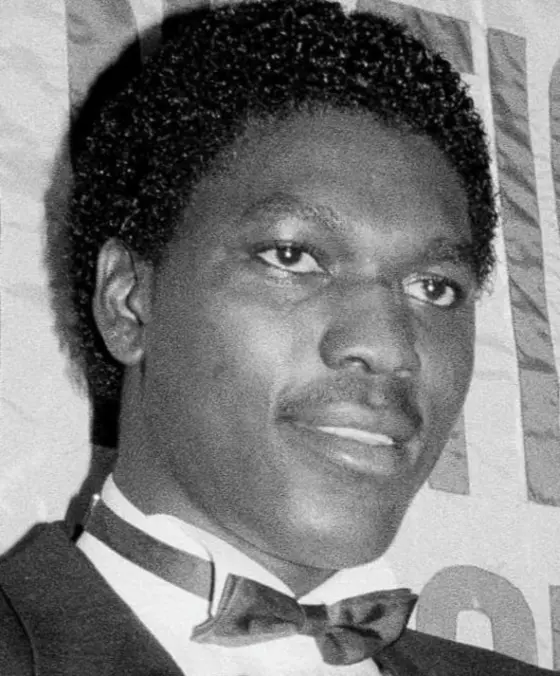
From Lagos to the MVP Trophy
Hakeem Olajuwon did not touch a basketball until he was 15 years old. He was a soccer goalkeeper and handball player in Lagos, Nigeria, where he grew up in a Yoruba Muslim family that ran a cement business. His mother and father sent him to Muslim Teachers College, where he entered a local basketball tournament on something close to a whim. He had been playing organized basketball for fewer than three years when he arrived at the University of Houston in 1980.
Fourteen years later, in June 1994, he stood at center court in Houston with the NBA championship trophy. He had just won three awards in one season that no player had ever won simultaneously: NBA Most Valuable Player, Defensive Player of the Year, and Finals MVP. He was the first foreign-born player to win the NBA MVP. He was also the first born-Muslim player to win it.
His faith had made the trip with him from Lagos, survived years of drift in a secular American environment, and come back stronger. By 1994, he was studying the Quran on planes between road games and waking before dawn during Ramadan to pray before his first meal of the day. He was not discreet about any of it.
The Kareem Question: What "First" Actually Means Here
Any honest treatment of this record has to address Kareem Abdul-Jabbar.
Kareem won six NBA MVP awards, starting in 1971 and running through 1980. He was the first prominent Muslim player in the history of American professional sports, and he carried that identity through decades of public life when it was not a comfortable thing to carry. He is the NBA's all-time leading scorer. His place in the history of Muslim representation in American sports is not in dispute.
But Kareem was born Lew Alcindor in New York City, raised Catholic, and converted to Sunni Islam in 1968, at age 21. He adopted his Muslim name publicly in 1971. His Islam was a faith he chose as a young adult, after years in another tradition.
Olajuwon's situation was different. He was born into a Muslim family in Lagos. He attended Muslim Teachers College. His given name was already in Arabic: Hakeem means "wise man" in Arabic, which he underscored in 1991 when he corrected the anglicized spelling "Akeem" back to its proper form, saying: "I'm not changing the spelling of my name, I'm correcting it." Islam was not something he chose. It was the fabric of his childhood in Nigeria, something he drifted from during his early American years, then returned to fully as an adult.
The specific distinction that belongs to Olajuwon is this: he was the first person born into the Muslim faith to win the NBA MVP award. That is a different record from Kareem's, not a competing one.
Playing Hungry: The Ramadan Season
The most counter-intuitive chapter of Olajuwon's career is also the most documented.
During Ramadan, Olajuwon observed the fast completely. No food. No water. From the moment of dawn until the moment of sunset, nothing passed his lips, including during NBA games. There was no water at halftime. No sports drinks on the bench. He would wake before dawn, eat seven dates (the traditional pre-fast meal), drink a gallon of water, and pray for strength before the day began.
His coaching staff worried. His statistics answered them.
In February 1995, Ramadan began on February 1. In 15 games that month, Olajuwon averaged 29.5 points, 10.1 rebounds, 3.8 assists, 3.4 blocked shots, and 1.4 steals per game across 39.7 minutes. He won NBA Player of the Month. On January 19, 1997, the second day of Ramadan, he scored 32 points and grabbed 16 rebounds in 39 minutes against the Chicago Bulls, the defending champions. The Rockets won 102-86.
There is also the night when Ramadan ended and the fast broke at sunset, and the following evening he played 46 minutes, scored 40 points including the first six points of overtime, and led his team to a win. He had eaten one full meal in the 24 hours before that performance.
He offered his own explanation simply: "As for fasting, it is a spiritual mindset that gives you the stamina required to play. Through Allah's mercy, I always felt stronger and more energetic during Ramadan."
Those performances became reference points for Muslim athletes around the world. The question of whether faith and elite athletic performance were compatible had a clear empirical answer, and it had Olajuwon's statistics attached to it.
The Triple Crown Season
The 1993-94 NBA season ended a decade-long conversation that had started in the 1984 NCAA championship game.
Olajuwon's University of Houston team, nicknamed Phi Slama Jama for their high-flying style, had made three Final Fours in four years. In 1984 they reached the championship game against Patrick Ewing's Georgetown Hoyas and lost. Olajuwon was selected first overall in the draft that June, in the same class as Michael Jordan (third), Charles Barkley (fifth), and John Stockton (sixteenth).
Ten years later, in the 1994 NBA Finals, Olajuwon faced Ewing again. The series went seven games. Olajuwon averaged 26.9 points on 50 percent shooting, 9.1 rebounds, and 3.9 blocked shots per game. Ewing averaged 18.9 points on 36.3 percent shooting. Olajuwon outscored Ewing in every single game of the series. In Game 7, Olajuwon posted 25 points and 10 rebounds as the Rockets won 90-84 to take the franchise's first championship.
At the end of that season, no player in NBA history had ever won MVP, Defensive Player of the Year, and Finals MVP in the same year. No player has done it since.
The following year, with the Rockets as a sixth seed and Olajuwon battling anemia that cost him eight games, they won again. He swept the Orlando Magic in the Finals, won his second consecutive Finals MVP, and did it with Clyde Drexler on his team. Drexler had been his Phi Slama Jama teammate in college. Their reunion completed a story that had started in defeat eleven years earlier.
The Move That Came from a Goalpost in Lagos
The Dream Shake is the most studied and imitated post move in basketball history. Its technical description: a sequence of shoulder fakes, pump fakes, and pivot-foot removal through a dribble-gather that makes it legal to step in either direction, creating an unpredictability most defenders cannot solve in real time. The result is one of three things: the defender is misdirected, frozen, or shaken out of position and cannot contest the shot.
Olajuwon's own explanation of its origin is more interesting than the technical description. "The Dream Shake was actually one of my soccer moves which I translated to basketball." The footwork he developed as a goalkeeper in Lagos, reading an attacker's body movement and committing to a direction, became the foundation of a post game that defeated the best players in the world for eighteen years.
Kobe Bryant, LeBron James, Dirk Nowitzki, and Kevin Garnett all studied the move explicitly. Joel Embiid, born in Cameroon, began working with Olajuwon in 2014 and credits those sessions for the post-scoring ability that made him a two-time scoring champion. Olajuwon ran these Big Man Camps without charging the players who attended.
He retired holding the NBA's all-time record in blocked shots: 3,830, set on April 21, 1996. He is the only player in NBA history with more than 3,000 career blocks and more than 2,000 career steals. A 7-foot center who could do both reflected the full-court awareness he had developed in a completely different sport, in a city far from any NBA arena.
Faith as a Public Identity, Not a Private Matter
The American public image of Muslim athletes in the 1980s and early 1990s was shaped almost entirely by people who had converted: Kareem Abdul-Jabbar, Muhammad Ali, Mahmoud Abdul-Rauf. Their Islam was a faith they had chosen, publicly and often dramatically, as a departure from something else. That story, of turning toward Islam, was legible to American audiences.
Olajuwon's story was harder to fit into that frame. He had not turned toward Islam. He had always been there. His parents ran a cement business in Lagos and taught their children, as he later described it, "to be honest, work hard, respect our elders, and believe in ourselves." Faith was part of that instruction from the beginning.
His rededication to practice in the early 1990s, when he found a mosque near the arena in Houston and returned to regular prayer and Quran study, was not a conversion. It was a return. He said as much: he was reclaiming something he had always owned, not acquiring something new. The name correction in 1991 was the public signal. After that, there was no separating the player from his faith. He fasted visibly during Ramadan. He founded the Islamic Da'Wah Center in Houston to support the local Muslim community. He built a real estate company, Palladio, on Islamic financial principles that prohibit interest, buying commercial buildings, apartments, and land entirely in cash. His post-career portfolio reached an estimated value above $150 million through transactions that did not involve a single interest payment.
When he spoke about diversity, he spoke from a tradition that had shaped the idea: "Humans are diverse in order to know one another and to constitute together a beautiful mosaic, united in diversity and diverse in unity." That was not a sentiment he adopted later in life. It was what his family had given him in Lagos, and what he carried to Houston and kept.
Frequently Asked Questions
Who was the first born-Muslim NBA MVP?
Hakeem Olajuwon, born in Lagos, Nigeria, became the first born-Muslim player to win the NBA Most Valuable Player award in 1994. He was raised in a Muslim family, attended Muslim Teachers College in Lagos, and arrived in the United States with his faith intact. In the 1993-94 season, he won NBA MVP, Defensive Player of the Year, and Finals MVP, a combination no player has achieved before or since.
What about Kareem Abdul-Jabbar? Was he not the first Muslim NBA MVP?
Kareem won six NBA MVP awards (1971, 1972, 1974, 1976, 1977, 1980) and was the first prominent Muslim player in NBA history. He converted from Catholicism to Sunni Islam in 1968 and publicly adopted his Muslim name in 1971. The specific distinction Olajuwon holds is as the first born-Muslim NBA MVP: someone raised in the faith from birth rather than someone who chose it as an adult. Both men's contributions to Muslim representation in American sports are real and distinct.
Did Hakeem Olajuwon really fast during Ramadan while playing NBA games?
Yes. During Ramadan, Olajuwon ate nothing and drank nothing from dawn to sunset, including during games. No water at halftime. No sports drinks on the bench. In February 1995, during Ramadan, he averaged 29.5 points, 10.1 rebounds, 3.4 blocked shots, and 3.8 assists per game across 15 games, winning NBA Player of the Month. He described fasting as a spiritual mindset that gave him stamina: "Through Allah's mercy, I always felt stronger and more energetic during Ramadan."
Why did Olajuwon change the spelling of his name from Akeem to Hakeem?
On March 9, 1991, Olajuwon corrected the spelling of his first name from "Akeem" to "Hakeem," the proper Arabic transliteration. He framed it not as a change but as a correction: "I'm not changing the spelling of my name, I'm correcting it." In Arabic, Hakeem means "wise man" or "doctor." The correction was a public act of Islamic self-identification at a point when he was deepening his practice of the faith.
What records does Hakeem Olajuwon still hold?
Olajuwon is the NBA's all-time leader in blocked shots with 3,830, a record he set on April 21, 1996, that still stands. He is the only player in NBA history with more than 3,000 career blocked shots and more than 2,000 career steals. He remains the only player to win NBA MVP, Defensive Player of the Year, and Finals MVP in the same season (1993-94). He was also the first foreign-born player to win the NBA MVP award.