June 17, 1985: The Mission That Made History
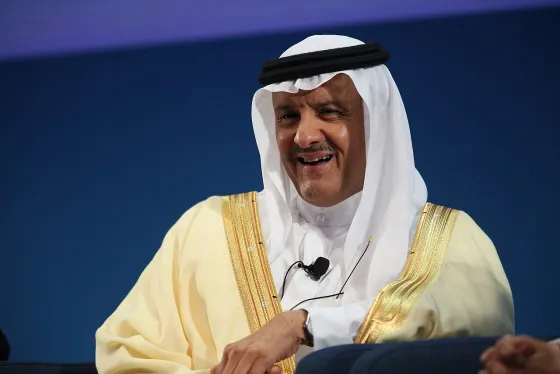
On June 17, 1985, Space Shuttle Discovery lifted off from Kennedy Space Center carrying seven crew members and three commercial satellites. One of those crew members was Sultan bin Salman bin Abdulaziz Al Saud, a 28-year-old Saudi pilot and member of the Saudi royal family. When Discovery cleared the launch tower, he became the first Muslim, first Arab, first Saudi national, and first member of any royal family to reach space.
The mission, designated STS-51-G, lasted 7 days, 1 hour, and 38 minutes. It was the 18th Space Shuttle mission overall and the fifth flight of orbiter Discovery. The crew deployed three communications satellites during the mission: Morelos-A for Mexico, Telstar 3-D for AT&T, and ARABSAT-1B for the Arab Satellite Communications Organization. Sultan's presence was tied directly to that third satellite.
STS-51-G was also the first Shuttle mission to carry crew members from three different nations simultaneously. Alongside five NASA astronauts flew Patrick Baudry of France (representing CNES) and Sultan bin Salman representing ARABSAT. Both were payload specialists, a category of crew member distinct from career NASA astronauts.
Who Was Sultan bin Salman?
Sultan bin Salman was born on June 27, 1956, in Riyadh. He is the son of Prince Salman, who became King of Saudi Arabia in 2015, making Sultan the current king's son and a senior figure within the House of Saud.
His education was international in scope. He earned a bachelor's degree in mass communications from the University of Denver in Colorado, then a master's degree in social and political science from the Maxwell School of Citizenship and Public Affairs at Syracuse University in New York. (The Maxwell School is an academic institution; it should not be confused with Maxwell Air Force Base in Alabama, which is a separate military installation with no documented connection to Sultan's biography.)
He also served in the Royal Saudi Air Force, where his pilot qualifications formed part of the basis for his selection as a payload specialist. He held the rank of lieutenant colonel at the time of his flight, eventually retiring from active military service in 1996 as a colonel.
His selection came through the ARABSAT channel. NASA's Shuttle-era policy allowed payload customers whose satellites occupied sufficient cargo space to nominate a human representative to fly alongside the mission. When the Arab Satellite Communications Organization contracted NASA to deploy ARABSAT-1B, Arab League member nations were invited to put forward a candidate. Sultan bin Salman was Saudi Arabia's nominee.
He was 28 years old during the flight, just 10 days short of his 29th birthday. That made him the youngest person ever to fly aboard a Space Shuttle, a record that has since been surpassed.
The ARABSAT-1B Deployment: What Actually Happened
Popular accounts of STS-51-G tend to treat the ARABSAT-1B deployment as straightforward. It was not.
ARABSAT-1B was built by Hughes Aircraft on the HS-376 satellite bus and attached to a Payload Assist Module-D (PAM-D), a solid rocket upper stage that would fire after deployment to boost the satellite from the Shuttle's low Earth orbit up to geosynchronous orbit, roughly 35,786 kilometers above Earth.
On June 18, 1985, approximately 80 seconds after the satellite was released from Discovery's payload bay at a distance of about 200 feet from the orbiter, ground controllers transmitted a command sequence that prematurely jettisoned the PAM-D kick motor. The separation bolts between the satellite and its upper stage fired before the ignition sequence had been triggered. The satellite was stranded in low Earth orbit without any means to reach its intended geosynchronous position.
The cause was a sequencing error in ground command procedures. Ground controllers eventually developed a recovery procedure, and ARABSAT-1B did reach operational status, though its lifespan was affected by the anomaly.
Sultan's stated role was to observe the deployment. In practice, payload specialists on commercial missions had limited hands-on involvement with deployment mechanics. The deployment itself, including the error and the recovery, was managed by NASA and ground teams.
The Payload Specialist Distinction
Understanding what Sultan bin Salman was, and was not, adds accuracy without diminishing the significance of his flight.
Career NASA astronauts go through a competitive selection process, then two or more years of basic training at Johnson Space Center. They are NASA employees, responsible for spacecraft systems, spacewalks, and crew safety. They may fly multiple missions across their careers. They must be US citizens.
Payload specialists are different. They are selected and sponsored by the payload customer, whether a company, a government agency, or an international organization. They undergo condensed training measured in weeks or months, focused only on their specific payload-related tasks. They are not NASA employees, not required to be US citizens, and typically fly once for one purpose.
Sultan bin Salman's condensed training lasted approximately 10 weeks. Patrick Baudry, the French payload specialist on the same mission, went through a similar process via CNES. Neither was a career astronaut. That is not a criticism; the Shuttle era explicitly created this category to allow commercial and governmental partners to have representation on missions their organizations were funding.
The historical record is clear: Sultan bin Salman was in space. He was the first Muslim to be there. The nature of his role is a factual detail, not a qualification of the achievement.
The Muslim Astronauts Who Followed
Sultan's 1985 flight is sometimes followed in popular summaries by a jump directly to 2006, as if no Muslim reached space in between. That omits at least one significant figure.
Muhammed Faris of Syria flew to the Soviet Mir space station on July 22, 1987, aboard Soyuz TM-3 as part of the USSR's Intercosmos cooperative program. He became the second Muslim and second Arab in space, with a mission lasting 7 days, 23 hours, and 5 minutes. He was awarded the Hero of the Soviet Union and the Order of Lenin. Faris later became a democracy activist following the Syrian civil war, fled in 2012, and lived in exile in Turkey until his death on April 19, 2024, at age 72. He was eulogized internationally as both "the Armstrong of the Arab World" and a figure of political courage.
Anousheh Ansari flew to the International Space Station in September 2006, becoming the first Muslim woman in space, the first Iranian in space, and the first female private space explorer. Born in Mashhad, Iran, she emigrated to the United States as a teenager and co-founded Telecom Technologies before funding the X Prize competition (renamed the Ansari X Prize in her family's honor). She launched on September 18, 2006, aboard Soyuz TMA-9, spent 8 days aboard the ISS, and became the first person to publish a blog from space, writing dispatches in real time that were read by millions.
Sheikh Muszaphar Shukor of Malaysia flew to the ISS in October 2007 aboard Soyuz TMA-11. An orthopedic surgeon selected through Malaysia's national Angkasawan programme, he conducted experiments on liver cancer cells, leukemia cells, and protein crystallization during his 11-day mission. His flight coincided with Ramadan, making him the first Muslim astronaut to face the practical question of fasting in orbit.
Hazzaa AlMansoori of the UAE became the first Emirati in space and the first Arab citizen at the ISS in September 2019, flying aboard Soyuz MS-15 for an 8-day mission. He was selected from 4,022 applicants and completed more than 1,400 hours of training at facilities in Russia, the United States, and Germany.
Sultan Al Neyadi, the second Emirati in space, flew a 6-month long-duration mission aboard SpaceX Crew-6 beginning March 2, 2023. On April 28-29, 2023, he and NASA astronaut Steve Bowen conducted a 7-hour, 1-minute spacewalk to route power cables for new solar array installation. Al Neyadi became the first Arab to perform a spacewalk (an extravehicular activity, or EVA).
Rayyanah Barnawi, a Saudi biomedical researcher specializing in cancer stem cells, flew on Axiom Mission 2 in May 2023, spending 9 days, 5 hours, and 27 minutes aboard the ISS. She became the first Saudi woman and first Arab woman in space. She conducted 14 experiments in microgravity and reached more than 12,000 Saudi students across 47 institutions through live satellite connections during the mission. After returning, she founded BioGravity, the first microgravity bioscience platform in the Arab region.
How Do Muslims Pray in Orbit?
When Sheikh Muszaphar Shukor prepared for his 2007 mission, Malaysia's Department of Islamic Development (JAKIM) convened approximately 150 Islamic scholars and scientists to address a question that Islamic jurisprudence had never formally confronted. The result was an 18-page document, "Guideline for Performing Islamic Rites (Ibadah) at the International Space Station," approved by Malaysia's National Fatwa Council in 2007.
The challenges were genuine. The ISS orbits Earth every 90 minutes, producing roughly 16 sunrises and sunsets per day. Following prayer times tied to the sun's position at orbital speed would theoretically require more than 80 prayers per 24-hour period. The direction of Mecca (qibla) cannot be precisely determined from a spacecraft moving at 28,000 kilometers per hour. And water-based ablution (wudu) is impractical when water forms floating spheres in microgravity.
The guidelines resolved each problem with a clear priority hierarchy. For prayer times: follow the schedule of Baikonur Cosmodrome in Kazakhstan, the launch site, anchoring to a standard 24-hour day with five prayer times. For the qibla: face the Ka'aba if achievable; if not, face toward its projection onto the orbital plane; if not, face Earth generally; if none of these is achievable, face any direction and the prayer is valid. For ablution: tayammum (dry ablution, performed by striking both palms against any clean surface) is fully permitted in microgravity. For fasting during Ramadan: fast based on Baikonur times, or postpone fasting until returning to Earth and make up the days then.
Sheikh Muszaphar reportedly fasted for approximately 10 days of Ramadan during his 11-day mission using Baikonur timings.
The document is a landmark in Islamic jurisprudence. It applies a legal principle that has guided Islamic thinking for centuries: where strict literal compliance is genuinely impossible, the closest feasible approximation fulfills the obligation. The spirit of the duty counts when the letter cannot be met.
Sultan's Longer Legacy
Sultan bin Salman spent about a week in space. He spent roughly two decades reshaping Saudi Arabia's cultural and heritage infrastructure.
After retiring from the Royal Saudi Air Force in 1996, he moved into public administration. In 2000, he became secretary-general of the newly founded Saudi Commission for Tourism and National Heritage, eventually serving as its president and chairman from 2008 to 2018. In that role, he led the effort to place Saudi sites on UNESCO's World Heritage list, including the 2008 designation of Hegra (also known as Mada'in Salih), the ancient Nabataean rock-carved city in Al-'Ula. It was Saudi Arabia's first UNESCO World Heritage Site.
On December 27, 2018, he was appointed chairman of the Board of Directors of the Saudi Space Commission, with ministerial rank. The commission he now leads produced the 2023 Axiom Mission 2 that sent Rayyanah Barnawi to the ISS. The first Arab in space became, nearly four decades later, the architect of Saudi Arabia's modern space program.
Frequently Asked Questions
Who was the first Muslim in space?
Sultan bin Salman Al Saud of Saudi Arabia, who flew aboard Space Shuttle Discovery on mission STS-51-G, launching on June 17, 1985. He was simultaneously the first Muslim, first Arab, first Saudi national, and first royal family member to reach space.
Was Sultan bin Salman a career NASA astronaut?
No. He flew as a payload specialist, not a career NASA astronaut. His role was tied specifically to the ARABSAT-1B satellite deployment, and he underwent approximately 10 weeks of condensed training rather than the 2-plus years required of career mission specialists. He was never employed by NASA or part of the NASA astronaut corps.
Who was the second Muslim in space?
Muhammed Faris of Syria, who flew to the Soviet Mir space station on July 22, 1987, aboard Soyuz TM-3 as part of the USSR's Intercosmos program. Many popular accounts skip from Sultan (1985) directly to Anousheh Ansari (2006), but Faris flew 21 years earlier than Ansari. He died in exile in Turkey in April 2024.
Who was the first Muslim woman in space?
Anousheh Ansari, an Iranian-American entrepreneur, who flew to the ISS on September 18, 2006, aboard Soyuz TMA-9. She was also the first Iranian in space and the first female private space explorer. Rayyanah Barnawi (2023) was the first Saudi and first Arab woman in space, but Ansari preceded her by 17 years.
How do Muslims pray in space?
Malaysia's National Fatwa Council issued 18-page guidelines in 2007, developed for Sheikh Muszaphar Shukor's ISS mission. Prayer times follow the schedule of the launch site (Baikonur, Kazakhstan), anchored to a standard 24-hour day with five prayers. For the qibla, Muslims face the Ka'aba if possible, then Earth's general direction, then any direction, in that order of priority. Dry ablution (tayammum) using any clean surface is permitted in microgravity.
Who was the first Arab to perform a spacewalk?
Sultan Al Neyadi of the UAE, who conducted a 7-hour, 1-minute spacewalk on April 28-29, 2023, during his 6-month mission aboard the ISS as part of SpaceX Crew-6.