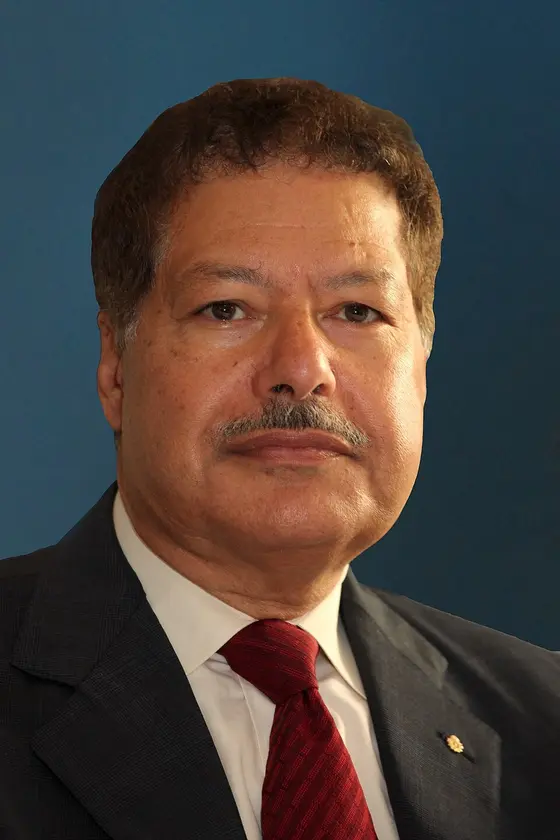
The Achievement
On October 12, 1999, the Royal Swedish Academy of Sciences awarded the Nobel Prize in Chemistry to Ahmed Hassan Zewail, a professor at the California Institute of Technology, for inventing femtochemistry: a method of using laser pulses so brief they can capture chemical reactions as they unfold, atom by atom, in real time.
Zewail was the first Muslim to win a Nobel Prize in Chemistry. He was also the first Egyptian and the first Arab to win a Nobel in any scientific field. Forty million Egyptians greeted the announcement as a national event. Streets in Cairo were named in his honor before he had returned home to receive congratulations in person.
The science he was recognized for answered a question chemists had held since the dawn of the discipline: what actually happens during the fraction of a second when one molecule becomes another? The transition state, the fleeting moment when old bonds break and new ones form, had been a theoretical construct for over a century. No one had ever seen it directly. Zewail built the instrument that made it visible.
From Damanhur to Caltech: A Life in Science
Ahmed Hassan Zewail was born on February 26, 1946, in Damanhur, a city in the Nile Delta region of Egypt, and raised in Desouk. His father worked for the Egyptian government; his family was devout, educated, and deeply proud of Egyptian culture. Zewail described his childhood home as one where learning and faith were not in tension. The mosque he attended as a boy, he later wrote, was a center of scholarship and community, not merely a place of ritual.
He completed his undergraduate and master's degrees at Alexandria University, graduating in 1967 with top marks. Recognizing that the best graduate programs in physical chemistry were in the United States, he applied to universities there. He enrolled at the University of Pennsylvania, where he earned his PhD in chemical physics in 1974 under Professor Robin Hochstrasser, whose work on laser spectroscopy would prove foundational to Zewail's own career. After a postdoctoral fellowship at UC Berkeley, he joined the faculty at Caltech in 1976 at age 30.
He would spend the rest of his career there, eventually holding the Linus Pauling Chair of Chemical Physics, one of the most prestigious endowed chairs in science. The symbolism was not lost on Zewail or on those who knew his work. Pauling himself had won two Nobel Prizes. Zewail would add one of his own to Caltech's collection.
The Science: Filming Atoms in Motion
To understand what Zewail achieved, it helps to understand the problem he was solving.
Chemistry is, at its core, the study of how molecules change. A reactant enters a reaction and a product comes out. In between, there is a transition state: a configuration of atoms where old chemical bonds are breaking and new ones are forming simultaneously. This transition state lasts for an extraordinarily short time, typically between 10 and 1,000 femtoseconds. For most of chemistry's history, this interval was so brief it was considered experimentally unreachable. Scientists could measure what went in and what came out; what happened in between was inferred from theory.
The key was laser technology. By the 1980s, physicists had developed lasers capable of producing pulses of light lasting just tens of femtoseconds. Zewail recognized that these pulses were short enough to serve as both a trigger and a camera. His technique works in two steps. A first laser pulse (the pump pulse) delivers energy to a molecule and initiates the reaction. A second laser pulse (the probe pulse) arrives at a precisely controlled interval later, scattering off the atoms and producing a signal that reveals their positions and energy states. By varying the delay between pulses and collecting thousands of snapshots, Zewail's team assembled a molecular film: a real-time record of atoms rearranging during a chemical reaction.
The Nobel Committee described the achievement plainly: "With the aid of his femtosecond spectroscopy technique, [Zewail] has been able to observe, in slow motion, what happens as atoms are rearranged in chemical reactions and has identified transition states." Transition states had been theoretical constructs since the 1930s. Zewail made them objects of direct observation.
Faith and Science: A Life Lived Without Contradiction
Zewail was a devout Muslim throughout his life and was direct about the relationship between his faith and his scientific work. In an interview with Fountain Magazine, he said: "There is nothing fundamental in Islam against science. It is all part of the unfair perception about Islam and Arabs in general."
He described his religious upbringing not as a constraint on curiosity but as its foundation. The tradition of inquiry in Islamic scholarship, the same tradition that had preserved Greek texts and advanced mathematics, astronomy, and medicine during the medieval period, was for Zewail not a historical footnote but a living inheritance. He spoke about the compatibility of Islam and science at universities, in public lectures, and in his 2002 memoir, "Voyage Through Time," which became a bestseller in Egypt.
After the 2011 Egyptian revolution, President Omar Suleiman and then the Supreme Council of Armed Forces invited Zewail to join a presidential advisory council. He accepted, motivated by what he described as a duty to contribute to Egypt's future. He lobbied for investment in science education, arguing that Egypt's best path to prosperity ran through research universities and technological development, not through political Islam or military nationalism. He was not naive about the difficulty. He returned to Caltech each time without illusions about how slowly institutions change.
He died on August 2, 2016, in Pasadena, California, at age 70. Egypt declared a period of national mourning. His coffin was draped in the Egyptian flag and carried through the streets of Cairo.
Where Zewail Fits in the History of Muslim Nobel Laureates
The question of who was the first Muslim to win a Nobel Prize in science requires one clarification. Abdus Salam of Pakistan shared the 1979 Nobel Prize in Physics for his work on electroweak unification, the theory that unified the electromagnetic force and the weak nuclear force as aspects of a single interaction. Salam was the first person of Muslim heritage to win a science Nobel. His case is complicated by a specific political reality: in 1974, Pakistan's parliament declared members of the Ahmadiyya Muslim Community, the sect to which Salam belonged, to be non-Muslim under Pakistani law. Salam died in 1996; the word "Muslim" was scraped from his headstone in Pakistan after his burial.
Many Muslims count Salam as a Muslim Nobel laureate; others do not, citing the legal designation in his country of birth. For this reason, Ahmed Zewail is often described as the first undisputed Muslim Nobel laureate in science, as well as the first in Chemistry specifically.
The sequence of Muslim Chemistry Nobel laureates is straightforward: Zewail in 1999, then Aziz Sancar in 2015. Sancar, a Turkish-American biochemist at the University of North Carolina at Chapel Hill, shared the 2015 Nobel with Tomas Lindahl and Paul Modrich for mapping the mechanisms of DNA repair, specifically the nucleotide excision repair pathway that handles UV-induced DNA damage. Sancar was public about his own Muslim identity after receiving the prize, stating: "I am proud of being a Muslim." The two Chemistry Nobels, 16 years apart, represent the full record of Muslim laureates in the field as of 2026.
The Legacy of Femtochemistry
Femtochemistry is now a standard tool in physical chemistry, applied to problems ranging from atmospheric chemistry to pharmaceutical design. Understanding how molecules move through transition states allows chemists to design reactions that proceed more efficiently, to model how drugs interact with biological targets, and to study the photochemical reactions that drive processes including vision, photosynthesis, and ozone depletion.
Zewail's own lab at Caltech went further still. In the 2000s, he developed a second technique called four-dimensional electron microscopy (4D EM), which combined ultrafast laser pulses with electron microscopy to capture atomic motion in three-dimensional space and time. Where femtochemistry captured the chemistry of bond-breaking and bond-forming in isolated molecules, 4D EM extended the approach to nanoscale structures: thin films, biological specimens, and materials under stress.
His scientific work grew directly out of a question he was asked as a graduate student at Penn: why do some excited molecules lose their energy so quickly while others hold it? The question did not have a satisfying answer. He spent the next 25 years building the instruments needed to find one. The Nobel Prize was the formal recognition that the answer he found had changed a field.
Frequently Asked Questions
Who was the first Muslim to win the Nobel Prize in Chemistry?
Ahmed Zewail was the first Muslim to win the Nobel Prize in Chemistry. He received the prize in 1999, as the sole laureate, for founding the field of femtochemistry. He used ultrashort laser pulses to observe chemical reactions at the femtosecond timescale, making the transition states between reactants and products directly visible for the first time.
What did Ahmed Zewail win the Nobel Prize for?
Zewail won for developing femtochemistry: a laser technique that uses pulses lasting femtoseconds (one quadrillionth of a second) to photograph chemical reactions in real time. A pump pulse triggers the reaction; a probe pulse arrives microseconds later to capture a snapshot of where the atoms are. By collecting thousands of such snapshots at different time delays, Zewail's team assembled the first real-time films of molecules changing their structure during a reaction.
What is a femtosecond?
One femtosecond is 10-15 seconds, or one quadrillionth of a second. To put it in context: a femtosecond is to one second as one second is to about 31.7 million years. Chemical bond-breaking events typically occur between 10 and 1,000 femtoseconds. Zewail's laser pulses were short enough to resolve individual steps within that window.
Was Abdus Salam the first Muslim Nobel laureate in science before Zewail?
Abdus Salam of Pakistan won the 1979 Nobel Prize in Physics, 20 years before Zewail. Whether Salam counts as a Muslim laureate is contested: he belonged to the Ahmadiyya sect, which Pakistan's parliament declared non-Muslim in 1974. Most Muslim sources count him; others do not. Ahmed Zewail, whose Muslim identity was unambiguous and publicly affirmed throughout his life, is often described as the first undisputed Muslim science Nobel laureate as well as the first in Chemistry specifically.
Who was the second Muslim to win the Nobel Prize in Chemistry?
Aziz Sancar, a Turkish-American biochemist at the University of North Carolina at Chapel Hill, became the second Muslim Chemistry Nobel laureate in 2015. He shared the prize with Tomas Lindahl and Paul Modrich for mapping the mechanisms of nucleotide excision repair, the cellular process that fixes UV-induced damage to DNA. Sancar publicly identified as Muslim after receiving the prize.