The Achievement
On November 6, 2018, Ilhan Omar of Minnesota and Rashida Tlaib of Michigan were elected to the United States House of Representatives. They were the first Muslim women in the history of Congress. Both were sworn in on January 3, 2019, the opening day of the 116th Congress.
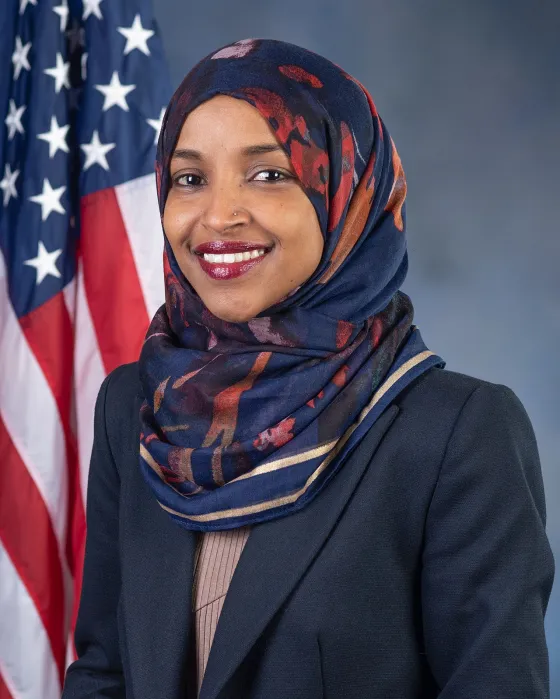
The elections carried multiple firsts within the firsts. Omar became the first Somali-American member of Congress, the first naturalized citizen from sub-Saharan Africa to serve in the House, and the first person to wear a hijab on the House floor. To accomplish that last milestone, Congress had to change a rule that had stood since 1837. Tlaib became the first Palestinian-American member of Congress and stacked her own state-level record: she had already served in the Michigan state legislature, elected in 2008.
Their elections came 12 years after Keith Ellison became the first Muslim in Congress, representing Minnesota's 5th District. When Ellison chose not to seek reelection in 2018 (running instead for Minnesota Attorney General, a race he won the same night Omar won the congressional seat), Omar ran for his district and won. The seat that first opened Muslim representation in Congress became the seat that extended it to include women.
Ilhan Omar: From Dadaab to Minneapolis to Washington
Ilhan Abdullahi Omar was born on October 4, 1982, in Mogadishu, Somalia, the youngest of seven children. Her mother died when she was around two years old. She was raised by her father, Nur Omar Mohamed, a teacher and government employee, and her maternal grandfather, who had served as director of Somalia's National Marine Transport.
When civil war broke out in Somalia around 1991, Omar was approximately eight years old. Her family fled Mogadishu and spent four years in the Dadaab refugee camp in Garissa County, Kenya, one of the largest refugee camps in the world. They were granted asylum in the United States in 1995 after a multi-year vetting process, arriving first in Arlington, Virginia, before resettling in Minneapolis in 1997. Omar was 12 years old, spoke only Somali, and had significant gaps in her formal schooling. She became a U.S. citizen in 2000, at age 17.
She graduated from Edison High School in Minneapolis in 2001, then earned a degree in political science and international studies from North Dakota State University in 2011. She worked in community organizing and as a nutritional educator before moving into electoral politics, including managing a Minneapolis City Council campaign in 2012.
In August 2016, Omar defeated a 22-year incumbent and another challenger in the DFL (Democratic-Farmer-Labor) primary for Minnesota House District 60B, winning the general election in November. She became the first Somali-American and the first Muslim woman elected to the Minnesota state legislature. She served from January 2017 until January 2019, when she was sworn into Congress.
In the 2018 congressional race, Omar won the DFL primary with approximately 48% of the vote in a competitive field, then defeated Republican Jennifer Zielinski with roughly 78% of the vote in the general election. The 5th District, which covers Minneapolis, is heavily Democratic.
Rashida Tlaib: Southwest Detroit to Capitol Hill
Rashida Harbi Tlaib was born in 1976 in Detroit, Michigan, the oldest of 14 children. Her father, who was born in Beit Hanina in East Jerusalem, worked on the assembly line at a Ford Motor Company plant in Detroit. Her mother was born near Ramallah in the West Bank. Tlaib grew up in Southwest Detroit, a working-class neighborhood with a significant Latino and Arab-American population.
She earned a bachelor's degree in political science from Wayne State University in 1998 and a law degree from Thomas M. Cooley Law School in 2004 (now Western Michigan University Cooley Law School), gaining bar admission in Michigan in 2007. Her entry into politics came through an internship with Michigan State Representative Steve Tobocman in 2004. When Tobocman was forced out by term limits, he encouraged Tlaib to run for his seat.
She won that race in the 2008 election and was sworn into the Michigan House of Representatives in January 2009, becoming the first Muslim woman to serve in the Michigan state legislature. She served until 2015, when term limits again applied, focusing on environmental justice, worker protections, and Arab-American civil rights.
Michigan's 13th Congressional District had been held for 52 years by John Conyers, who resigned in December 2017 after sexual harassment allegations. In the 2018 Democratic primary for the regular congressional race, Tlaib prevailed in a close contest and ran effectively unopposed in the general election, with no Republican filing to face her.
The Rule That Had to Change
The House of Representatives had prohibited head coverings on its floor since 1837. The ban originated as a symbolic break from British parliamentary tradition, where wearing a hat during debate had been standard practice. Removing it was considered a sign of respect in the American chamber. The rule had no religious accommodation clause.
For 181 years, the prohibition posed no practical problem because no member wore religious head coverings. Omar's election changed that immediately.
In November 2018, following the election results, incoming House Democratic Leader Nancy Pelosi and Representative Jim McGovern of Massachusetts, the incoming Rules Committee chair, worked with Omar to draft an amendment to the House rules package. The amendment did not eliminate the hat prohibition. It added a clause explicitly exempting religious head coverings from the ban. The language: the prohibition "does not include religious headwear."
On January 3, 2019, the first day of the 116th Congress, the full rules package passed 234 to 197, almost entirely along party lines. Omar wore her hijab on the floor that same day, the day she was sworn in. The change also cleared the path for members to wear kippot and Sikh turbans without procedural objection.
Legislative Records
Omar and Tlaib entered the 116th Congress as part of an informal group quickly labeled "the Squad" by the media: four progressive Democratic freshman women who had met during orientation week in November 2018. The group included Alexandria Ocasio-Cortez of New York and Ayanna Pressley of Massachusetts. The name came from a photo Ocasio-Cortez posted on Instagram during that orientation week.
Omar's committee assignments across her terms included the House Foreign Affairs Committee, the House Education and Labor Committee, and the House Budget Committee. Her legislative work has included co-sponsoring the NO BAN Act (aimed at repealing the Muslim travel ban), authoring the Neighbors Not Enemies Act to repeal the Alien Enemies Act of 1798, and developing a package of seven foreign policy bills she called the Pathway to PEACE platform. On February 2, 2023, House Republicans voted 218 to 211 to remove Omar from the Foreign Affairs Committee, a move Speaker Kevin McCarthy had pledged before taking the gavel. Omar was defiant in her floor speech before the vote.
Tlaib's committee work centered on the House Financial Services Committee and the House Oversight and Accountability Committee, reflecting her focus on housing, banking, and consumer protection. Her Water is a Human Right Act, which would end water shutoffs and assist low-income households, attracted more than 70 co-sponsors. Her Payee Fraud Prevention Act, which targets fraudulent schemes aimed at seniors and people with disabilities receiving government payments, was signed into law. Between 2019 and 2025, she introduced more than 160 bills and amendments, with 40 passed. On November 7, 2023, the House voted 234 to 188 to censure Tlaib over statements she made about the Israel-Hamas war following the October 7, 2023 Hamas attack on Israel. Twenty-two Democrats voted with Republicans in favor of the censure.
What the 2018 Elections Represent
The elections of Omar and Tlaib happened during a period of heightened anti-Muslim sentiment in American politics, in the immediate aftermath of the Muslim travel ban and the national debate it produced. That context matters. Their victories did not occur in a neutral environment. They occurred in spite of an active political climate working against the visibility of Muslim Americans in public life.
Their presence also pushed back against a persistent assumption that Muslim identity in America is uniform. Omar is a Somali-born refugee who wears hijab. Tlaib is a Detroit-born Palestinian-American who does not. Their communities, their constituent concerns, their personal styles, and their political histories are distinct. Two Muslim women in Congress simultaneously, with different backgrounds and different approaches, made the monolithic picture harder to sustain.
There is also the matter of what they each represent at the state level before the federal one. Omar had been the first Somali-American in any state legislature. Tlaib had been the first Muslim woman in the Michigan legislature, with Missouri's Jamilah Nasheed having preceded her nationally by two years. Both women had a record of legislative work before their congressional elections. The 2018 victories were not sudden arrivals from outside the political system. They were the next step in careers that had already broken ground at the state level.
The seat Omar won had been Keith Ellison's for six terms. Ellison had opened Muslim representation in Congress in 2007, winning on Jefferson's Quran. He did not lose the seat. He chose to leave it. The fact that it passed from the first Muslim in Congress to one of the first Muslim women in Congress, without a gap, is the cleanest throughline in the history of Muslim representation in federal office.
Frequently Asked Questions
Who were the first Muslim women elected to Congress?
Ilhan Omar of Minnesota and Rashida Tlaib of Michigan, both elected on November 6, 2018, and sworn in on January 3, 2019. They remain the longest-serving Muslim women in congressional history.
Was Ilhan Omar the first person to wear hijab in Congress?
Yes. On January 3, 2019, the same day she was sworn in, Omar became the first member of Congress to wear a hijab on the House floor. A 181-year-old rule banning head coverings was amended that same day to explicitly permit religious headwear. The rule change passed 234 to 197.
Is Rashida Tlaib the first Palestinian-American in Congress?
Yes. Born in Detroit to Palestinian immigrant parents, Tlaib became the first Palestinian-American member of Congress when she was sworn in on January 3, 2019.
Which district does Ilhan Omar represent?
Minnesota's 5th Congressional District, centered on Minneapolis. She succeeded Keith Ellison, the first Muslim elected to Congress, who vacated the seat to run for Minnesota Attorney General in 2018.
Was Rashida Tlaib the first Muslim woman elected to a state legislature?
No. That distinction belongs to Jamilah Nasheed of Missouri, who was elected to the Missouri House of Representatives in 2005 and sworn in January 2007. Tlaib was the first Muslim woman in the Michigan state legislature, elected in 2008. The error is widely repeated, including in sources that should know better.
How many Muslim women have served in Congress?
As of 2026, three. Omar and Tlaib were first elected in 2018. Lateefah Simon of California was elected in November 2024 and seated in January 2025, making her the third Muslim woman to serve in Congress and the first from California.