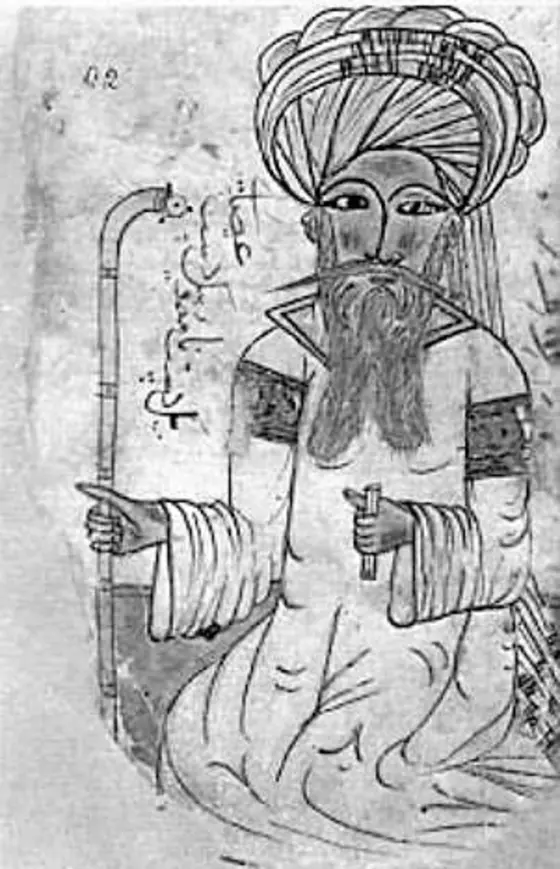
The Achievement
Ibn Sina was a Persian physician who completed the Canon of Medicine in 1025 CE and, in doing so, gave the medical world a single, internally consistent reference that it used for the next six centuries. William Osler, the Canadian physician who co-founded Johns Hopkins Hospital and is considered one of the fathers of modern medical education, called it "the most famous medical textbook ever written" and "a medical bible for a longer time than any other work."
That judgment is not hyperbole. The Canon remained required reading at the Universities of Louvain and Montpellier until 1657. Fifteen Latin editions were printed in the last three decades of the 15th century alone. More than 35 editions appeared in the 15th and 16th centuries combined. In an era before the printing press standardized scholarly communication, no medical text came close to that circulation. Medieval European physicians summarized the history of medicine in a single epigram: "Medicine was absent until Hippocrates created it, dead until Galen revived it, dispersed until al-Razi collected it, and deficient until Avicenna completed it."
A note on names and identity that matters: Ibn Sina was Persian, not Arab. He was born near Bukhara in the Samanid Persian Empire, in what is now Uzbekistan. He wrote in Arabic because it was the scholarly lingua franca of his era, in the same way European scholars wrote in Latin regardless of where they were from. His ethnic, cultural, and political identity was Persian. His tomb in Hamadan, Iran, is a major national monument, and his image appeared on Iranian currency. Calling him Arab because he wrote in Arabic is the same error as calling Erasmus English because he wrote in Latin.
A Child Who Outgrew Every Teacher
Ibn Sina was born around 980 CE near the village of Afshana, outside Bukhara. His father was an administrator in the Samanid court. By the time Ibn Sina was 10, he had memorized the Quran and was studying Arabic poetry and philosophy. By 13, he began medicine. By 16, he was treating patients that established physicians could not.
He wrote in his autobiography with characteristic directness: "Medicine is no hard and thorny science like mathematics and metaphysics, so I soon made great progress; I became an excellent physician." The confidence is not unfounded. At 17 or 18, he was summoned to treat Sultan Nuh II of Bukhara, who had fallen ill with a condition the court physicians were unable to diagnose. Ibn Sina succeeded where the others had failed. His reward was access to the royal library, which he described as holding books he had never seen and would never see again. He worked through the entire collection.
The library later burned. Some historians suspect the fire was set deliberately to remove Ibn Sina's competitive advantage, though the evidence is circumstantial. What is certain is that by his early 20s, Ibn Sina had already begun drafting what would become the Canon, carrying the project across cities and courts as his turbulent professional life moved him from Bukhara to Gorganj to Rey to Hamadan over the following decades.
The Canon of Medicine: Structure and Why It Lasted
The Canon is not a case book or a physician's handbook. It is a systematic intellectual architecture, built to be both comprehensive and searchable.
Book 1 covers the general principles of medicine: the four humors, temperaments, anatomy, and the causes of health and disease, along with substantial material on hygiene, nutrition, and preventive care. Ibn Sina dedicated more space to maintaining health than to treating disease, a priorities ordering that anticipates preventive medicine by several centuries. Book 2 covers simple (single-ingredient) drugs, arranged alphabetically, with 760 substances documented in terms of their effects, dosages, and side effects. Book 3 is the largest and addresses diseases organ by organ from head to toe. Book 4 covers systemic conditions: fevers, tumors, fractures, and general disease processes. Book 5 is a formulary of compound medicines.
What made the Canon authoritative in European universities was not only its scope but its organization. Medieval European medicine before the Canon's arrival was fragmentary: Galen in one manuscript tradition, Hippocrates in another, scattered Arabic commentaries circulating without coherent synthesis. The Canon created a single, internally consistent framework a student could move through systematically. Medical scholars began adopting it in the 13th century. It entered university curricula formally in the 14th century. It stayed there for three more centuries after that.
Clinical Trials, 750 Years Early
The most striking modern resonance in the Canon is its seven-rule framework for testing drugs. James Lind's scurvy trial in 1747 is the event most medical historians cite as the origin of the clinical trial. Ibn Sina wrote his drug testing rules in 1025 CE. The gap is approximately 750 years.
The seven rules require: that the drug be pure and uncontaminated; that it be tested on a simple disease rather than one complicated by multiple conditions; that it be tested on at least two different disease types to confirm its action; that drug potency match the severity of the disease; that experiments be conducted on the human body, not only on animals; that the effect be consistent and reproducible across cases; and that the time needed for the drug to act be accounted for.
The James Lind Library, established at the Royal College of Physicians of Edinburgh specifically to document the history of controlled trials, identifies this framework as "the earliest known treatise related to clinical trials." A 2009 paper in the Annals of Internal Medicine titled "Ibn Sina and the Clinical Trial" made the same argument in peer-reviewed form. The rules are not incidentally similar to modern randomized controlled trial methodology. They are a direct intellectual precursor to it: reproducibility, species-appropriate testing, controlled conditions, time-adjusted observation. The core logic is the same.
Contagion, Quarantine, and a Theory That Preceded Germ Theory by Eight Centuries
The dominant medieval European understanding of disease held that illness arose from internal imbalances in the four humors, influenced by celestial events and local environmental conditions. The idea that a sick person could transmit disease to a healthy one through direct contact or a shared medium was not standard doctrine.
Ibn Sina proposed in the Canon that certain diseases spread through contaminated water and soil, and through bodily contact and fluids between people. He identified phthisis (tuberculosis) as contagious, an observation that European medicine resisted until germ theory arrived in the 19th century. He advocated isolating sick individuals for 40 days to prevent disease spread.
That 40-day figure is worth pausing on. In Arabic, the word for forty is arba'in. The word "quarantine" derives from the Italian and French words for forty (quarantina, quarante). The Venetian port quarantine system, usually cited as the origin of formal quarantine practice in Europe, dates to the 14th century and used the same 40-day period. The precise etymological path from Ibn Sina's isolation protocol to the Venetian practice is plausible but not fully established in the historical record. What is clear is that Ibn Sina articulated the principle of isolation-based disease prevention in 1025, before European public health practice formalized it.
His contagion theory did not include germ theory in its modern form; he did not describe microorganisms. But the functional insight, that disease moves between people through specific media and can be interrupted by separation, is the foundation on which germ theory was later built. The COVID-19 pandemic prompted renewed scholarly attention to this aspect of the Canon, with multiple papers examining his contagion concepts in light of pandemic response.
Meningitis, Depression, and the Diseases No One Else Had Named
The Canon contains the first clinical description of meningitis as a distinct disease entity. Ibn Sina distinguished two types: meningitis originating in the brain itself and meningitis arising as a complication of infection elsewhere in the body. That differentiation between primary and secondary meningitis remains clinically meaningful in modern neurology. He described the diagnostic signs that are still the standard presentation: neck stiffness, fever, and sensitivity to light.
He also gave early documented descriptions of what we would now call depression and anxiety, and he wrote explicitly about the mind-body relationship in illness. The Canon addresses how mental states affect physical health and how chronic illness affects mental states. This is not incidental; Ibn Sina dedicated sections of the Canon to the physician's obligation to account for a patient's psychological condition as part of treatment, not as a separate concern but as part of the same medical reality.
His approach to psychiatric conditions was more systematic than most of his contemporaries. He described the pulse changes associated with emotional states, documented cases where psychological distress produced physical symptoms, and argued that the physician could not treat the body while ignoring what was happening in the mind. Psychosomatic medicine has a long history; Ibn Sina is one of its earliest systematic contributors.
The Book of Healing: Philosophy Is Not a Side Project
The Kitab al-Shifa, translated into English as the Book of Healing, is widely misunderstood because of its title. It is not a medical text. The healing it refers to is the healing of ignorance, not of bodies. It is a philosophical and scientific encyclopedia covering logic, natural sciences, mathematics (arithmetic, geometry, astronomy, and music theory), and metaphysics.
Ibn Sina began it around 1014 CE and completed it around 1020 CE. It is the work through which his influence on European philosophy was transmitted. Thomas Aquinas engaged with it. Roger Bacon engaged with it. Portions were translated into Latin in the 12th century and entered the scholastic curriculum alongside the Canon.
In the Book of Healing, Ibn Sina critiques Aristotelian induction and argues for experimentation as the correct method for scientific inquiry. This is not a marginal point. The argument that knowledge should be derived from observation and repeated experiment rather than from inherited authority is one of the methodological foundations of what became the scientific revolution. Ibn Sina made it in 1020, roughly 600 years before Francis Bacon formalized a similar argument in the European tradition.
Of his approximately 240 surviving works (out of roughly 450 attributed), fewer than 40 are specifically medical. About 150 are philosophical. He wrote poetry, contributed to astronomy, and composed a treatise on music theory. The Canon made him famous as a physician. But to his contemporaries and to the Islamic Golden Age tradition that shaped him, he was above all al-Shaikh al-Ra'ees: the Master Wise Man.
Death, Burial, and Six Centuries of Influence
Ibn Sina died in June 1037 CE in Hamadan, Iran, during the Islamic month of Ramadan. He had accompanied the Buyid ruler Ala al-Dawla on a military campaign toward Isfahan when a severe colic attack, likely intestinal obstruction, proved fatal. He had suffered from colic chronically throughout his life. He was 57 years old.
His tomb in Hamadan became a pilgrimage site and is today one of the most visited monuments in Iran. In 1952, Iran commissioned a new mausoleum building, designed in a modernist architectural style, to replace the older structure. Ibn Sina's image appeared on Iranian currency. The site has been nominated for UNESCO heritage recognition.
In European intellectual culture, his standing in the centuries after his death was substantial. Medieval European physicians ranked him with Hippocrates and Galen and applied the Latin title princeps medicorum, Prince of Physicians, to his name. The Canon entered European medical curricula in the 13th and 14th centuries and stayed there until 1657 at the last holdout institutions. Every major European medical author from the 12th through the 16th centuries either cited him directly or worked within a tradition that treated his framework as the foundation.
What makes that influence traceable, not just asserted, is the publication record. Fifteen Latin editions of the Canon in the last three decades of the 15th century alone. More than 35 in the 15th and 16th centuries combined. These are printed books, subject to publisher records, library catalogs, and physical survival. The Canon did not influence European medicine by reputation or rumor. It influenced it because physicians read it, year after year, for six hundred years.
Frequently Asked Questions
Who was Ibn Sina (Avicenna)?
Ibn Sina (c. 980-1037 CE), known in the West as Avicenna, was a Persian polymath from near Bukhara in the Samanid Empire (modern Uzbekistan). He was a physician, philosopher, mathematician, and astronomer whose Canon of Medicine became the dominant medical textbook in both Islamic and European universities for roughly 600 years. He was not Arab; he wrote in Arabic because it was the scholarly lingua franca of his era, but his ethnic, cultural, and national identity was Persian.
What is the Canon of Medicine?
Al-Qanun fi al-Tibb (the Canon of Medicine) is a five-volume medical encyclopedia of approximately one million words, completed by Ibn Sina in 1025 CE. It covers general principles of medicine, 760 drugs with dosages and side effects, diseases organized by organ system from head to toe, systemic conditions including fevers and tumors, and a formulary of compound medicines. Gerard of Cremona translated it into Latin in the 12th century. It remained required reading at the Universities of Louvain and Montpellier until 1657.
Did Ibn Sina invent clinical trials?
Ibn Sina codified a seven-rule framework for testing drugs in the Canon (c. 1025 CE), approximately 750 years before James Lind's scurvy trial in 1747, which Western medical history usually cites as the first clinical trial. The James Lind Library, established at the Royal College of Physicians of Edinburgh to document the history of controlled trials, identifies Ibn Sina's seven rules as the earliest known treatise related to clinical trial methodology. The rules require drug purity, testing on simple diseases, reproducibility, human testing (not only animal models), and time-adjusted observation.
How is Ibn Sina different from al-Zahrawi?
Al-Zahrawi (c. 936-1013 CE) built systematic surgery: instruments, techniques, illustrated operative manuals, catgut sutures, vessel ligation. Ibn Sina (c. 980-1037 CE) built systematic internal medicine: diagnosis, pharmacology, clinical trial methodology, disease classification by organ system, and contagion theory. They were contemporaries working in different regions (al-Zahrawi in Cordoba, Spain; Ibn Sina in Bukhara and Persia) and represent two parallel peaks of Islamic Golden Age medicine, not overlapping ones.
Why is Ibn Sina called the Father of Early Modern Medicine?
Ibn Sina is called the Father of Early Modern Medicine because the Canon of Medicine was the most influential medical textbook of the medieval world. He was the first to codify clinical trial rules, the first to describe meningitis as a distinct clinical entity, and the first to propose that disease spreads through contaminated water, soil, and bodily contact. A medieval European epigram captured his place in the tradition: "Medicine was absent until Hippocrates created it, dead until Galen revived it, dispersed until al-Razi collected it, and deficient until Avicenna completed it."