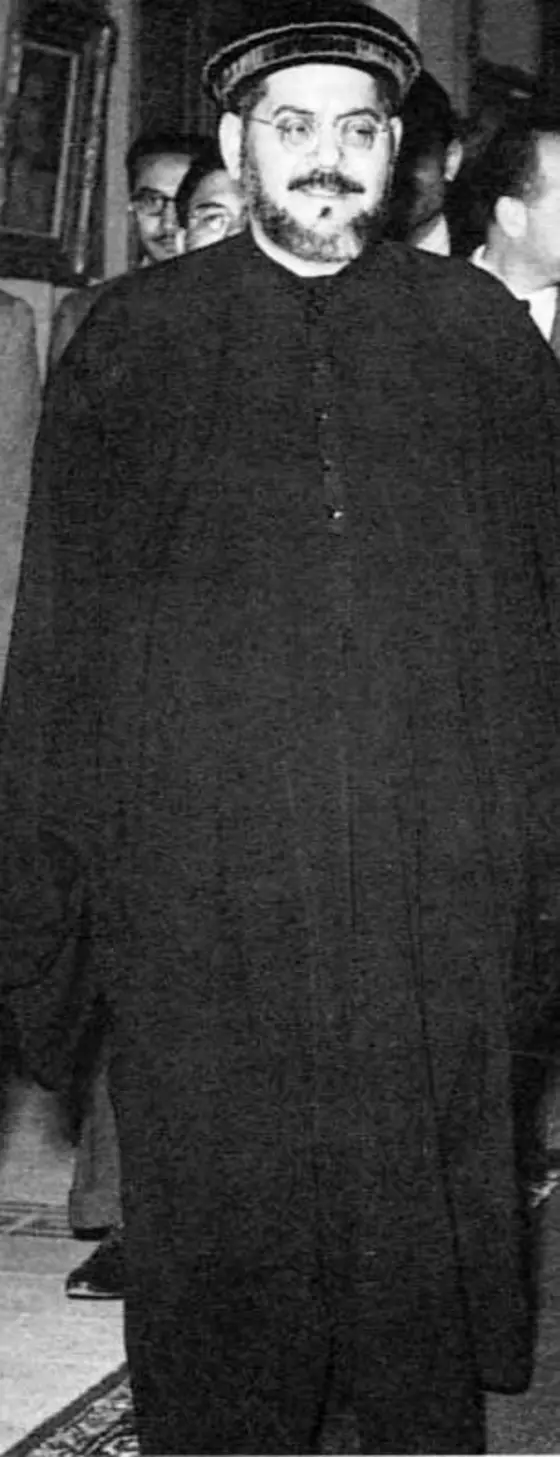
The Achievement
On October 13, 1988, the Swedish Academy announced that the Nobel Prize in Literature would go to Naguib Mahfouz of Egypt. He was 76 years old, had published his first novel 49 years earlier, and was already considered the most important figure in modern Arabic fiction. In the Arab world, the prize confirmed what readers there had known for decades. In the West, it introduced a writer almost nobody had heard of.
Mahfouz was the first person to write in Arabic as a native tongue to win the Nobel Prize in Literature, and by that fact the first Muslim to win the award in that category. The Swedish Academy cited work that "through works rich in nuance, now clear-sightedly realistic, now evocatively ambiguous, has formed an Arabian narrative art that applies to all mankind."
He did not travel to Stockholm for the ceremony. Egyptian journalist and playwright Mohamed Salmawy read the Nobel lecture on his behalf on December 8, 1988, first in Arabic, then in English. In that lecture, Mahfouz described himself as "the son of two civilizations that have formed a happy marriage: the Pharaonic and the Islamic," and spoke of absorbing from both Eastern and Western literary traditions. It was a precise summary of a 70-year career.
The Neighborhood That Made Everything
Naguib Mahfouz was born December 11, 1911, in the Gamaliyya district of Old Cairo, the youngest of seven children. Gamaliyya was (and remains) a dense medieval neighborhood of narrow lanes, Islamic monuments, and centuries of accumulated city life. His father was a civil servant. The family were devout Muslims, and Mahfouz received early Qur'anic education at a mosque school, where he learned classical Arabic.
Two events in childhood shaped everything that followed. In 1919, at age seven, Mahfouz watched from a window as British soldiers fired on demonstrators during the Egyptian Revolution. A political consciousness formed on the spot and never left. When he was twelve, the family moved from Gamaliyya to the newer suburb of Abbassia. But Mahfouz never emotionally left Gamaliyya. He spent the rest of his life returning to its cafes, and it became the physical and spiritual setting of his most important work.
In 1930 he enrolled at the Egyptian University (now Cairo University) to study philosophy, specifically to "solve the mystery of existence," as he described it, over his parents' preferred careers of medicine or engineering. He graduated in 1934 and immediately began a 37-year career as a government civil servant, working in the Ministry of Mortmain Endowments, the Bureau of Art, and eventually the Cinema Organization. He wrote before dawn and on weekends, in the cafes of downtown Cairo, and produced a body of work that would take decades for the rest of the world to discover.
Seventy Years of Writing: The Phases That Built a Masterwork
Mahfouz's literary career divides into four distinct phases, each representing a different mode of engagement with Egypt, with fiction, and with the question of what the novel could do.
His first novels, published between 1939 and 1944, were historical fiction set in ancient Egypt. Khufu's Wisdom (1939), Rhadopis of Nubia (1943), and Thebes at War (1944) drew on pharaonic history to explore power and justice, an attempt to root Egyptian literature in the country's pre-Islamic civilizational past. They were ambitious, and they established him as a serious literary presence, but they were not yet the work that would define him.
Around 1945, Mahfouz made a decisive turn. He set his fiction in the streets and alleys of contemporary Cairo, the same neighborhoods he had grown up in and never fully left. Khan al-Khalili (1945) and Midaq Alley (1947) introduced his signature mode: the dense social portrait of an urban community, rendered with psychological precision. These novels established him as a major figure in Arabic literature. They also set the stage for the work that would eventually bring him to Stockholm.
The Cairo Trilogy: The Work That Changed Arabic Literature
The Cairo Trilogy, comprising Palace Walk (1956), Palace of Desire (1957), and Sugar Street (1957), is the work the Nobel committee most directly cited and the work by which Mahfouz is remembered. It is a three-generation family saga set in Gamaliyya during the years 1917 to 1944, following the household of al-Sayyid Ahmad Abd al-Jawad through British occupation, the 1919 Revolution, and Egypt's long road toward independence.
Palace Walk covers the first generation: the patriarch, his pious and sheltered wife, and their children growing up in the walled household of the old city. Palace of Desire follows the sons into the 1920s, where they encounter nationalism, nightlife, and the first pressures of modernity. Sugar Street covers the 1930s and early 1940s, when the third generation navigates socialism, the Muslim Brotherhood, and the outbreak of World War II. Across three novels and three decades, Mahfouz used one family as a lens on an entire society in transformation.
The comparison scholars reach for most often is Tolstoy. The scope is similar: a single family as a vessel for national history, rendered with psychological depth across generations. Dickens is invoked for the social observation, Proust for the treatment of memory and time. But the work is distinctly Egyptian and distinctly Arabic. Mahfouz pioneered the use of colloquial Egyptian Arabic in dialogue, breaking with the classical literary tradition that insisted all serious fiction be written in formal fusha. This was a formal and political decision at once: his characters spoke as Egyptians actually spoke.
The trilogy was written in the late 1940s but not published until 1956-57. By 1988, it had been recognized for decades as the cornerstone of modern Arabic literature. The Nobel announcement sent the Western publishing world scrambling to catch up. The American University in Cairo Press, which held primary rights, accelerated translation projects across dozens of languages. Before 1988, Mahfouz's work was almost entirely unknown outside the Arab world. After it, his novels appeared in 40 languages.
The Book That Almost Killed Him
In 1959, Mahfouz published a novel in serialized form in Al-Ahram, Egypt's leading newspaper. Children of Gebelawi (also known in English as Children of the Alley) is structured as a neighborhood saga in which five central figures correspond to Adam, Moses, Jesus, Muhammad, and Science. The patriarch "Gebelawi" represents God. The novel traces humanity's repeated attempts to find justice and liberation through these successive figures, and ends with the last representative (of science and modernity) dying, while Gebelawi remains silent or absent.
Egyptian religious authorities at Al-Azhar condemned it immediately. The implication that Islam, like the faiths before it, ultimately failed to deliver the liberation it promised was treated as blasphemy. The character corresponding to Muhammad was depicted in humanizing and allegorical terms that the religious establishment found offensive. Publication in book form was banned in Egypt. The novel was published in Beirut in 1967 but did not appear as an Egyptian book until 2006, four months after Mahfouz's death.
For decades, the ban and the controversy followed him. Mahfouz maintained that the book was literary allegory, not apostasy, and said he had been genuinely surprised by the extremity of the reaction. He did not publicly recant it, but he also did not push for its Egyptian publication during his lifetime.
In 1989, when Ayatollah Khomeini's fatwa against Salman Rushdie dominated international headlines, Egyptian cleric Omar Abdel-Rahman (later convicted in the 1993 World Trade Center bombing) publicly declared that Mahfouz was an apostate deserving death. There was no formal fatwa, but Abdel-Rahman's words were treated as authorization by his followers.
On October 14, 1994, a 26-year-old member of al-Gamaa al-Islamiyya stabbed Mahfouz in the neck outside a friend's car near the Nile in Cairo. Mahfouz was 82 years old. He survived. The stab wound caused permanent nerve damage to his right arm, severely limiting his ability to write by hand. For the remaining 12 years of his life he dictated his work, continuing to produce short stories until 2004. Children of Gebelawi was published in Egypt as a book for the first time in 2006, four months after his death on August 30 of that year. He was 94.
Faith, Identity, and the Writer Between Two Civilizations
The most common misreading of Mahfouz is to frame Children of Gebelawi as evidence that he rejected Islam. He did not. He was born into a devout Muslim household, received a classical Qur'anic education, and by all accounts maintained personal Islamic faith throughout a 94-year life. He described himself repeatedly as "the son of two civilizations that have formed a happy marriage: the Pharaonic and the Islamic." In his Nobel lecture he honored both as pillars of his identity and his work.
What he rejected was Islamism: the use of religion as a political weapon, the equation of faith with fanaticism, and the closing of minds in the name of the sacred. He wrote in newspaper columns throughout his career that "religion should be interpreted in an open manner" and "should speak of love and humanity." He was a secular humanist in his public life and a man of personal faith in his private one. The tension between those two things, applied to Egypt's history, produced his best fiction.
His synthesis as a writer was not only religious. He absorbed Dostoevsky, Tolstoy, Proust, Kafka, and Zola alongside classical Arabic literary tradition, and used both to write novels that were unmistakably Egyptian. The Swedish Academy's permanent secretary called this synthesis "the result of classical Arabic tradition, European inspiration and personal artistry" and credited Mahfouz with bringing the Arabic novel to "international standards of excellence." That is a precise description of what he accomplished: not a translation of European novelistic form into Arabic, but something new built from both.
What One Prize Did for an Entire Literature
Before October 13, 1988, almost no novels written in Arabic had been translated into English. The Arabic literary tradition, spanning more than a millennium, was largely absent from Western bookstores and curricula. Mahfouz had been the dominant figure in that tradition for 40 years. None of that had translated into Western recognition.
The Nobel announcement changed that. Within months, translation projects accelerated across Europe and North America. The American University in Cairo Press, which holds primary rights to Mahfouz's work, ultimately published or licensed more than 600 foreign-language editions in 40 languages. Other Arabic authors received new attention from publishers who had previously shown no interest. The market for Arabic literature in translation, which had been effectively nonexistent, opened.
In 1996, AUC Press established the Naguib Mahfouz Medal for Literature, an annual prize awarded on Mahfouz's birthday (December 11) that includes a $5,000 cash award and, crucially, the translation and international publication of the winning novel into English. The prize directly extended the access that his 1988 Nobel had created. Writers who would otherwise have had no path to Western readers gained one through the mechanism he made possible.
Orhan Pamuk of Turkey won the Nobel Prize in Literature in 2006, the same year Mahfouz died. Pamuk is sometimes cited as a second Muslim Nobel Literature laureate, though his personal secularism is well-documented and his religious identity more complicated. Mahfouz's position as the first stands without qualification. No Muslim writer had won the prize in the 87 years before him. The 1988 award was not an incremental step; it was the first one.
Frequently Asked Questions
Who was the first Muslim to win the Nobel Prize in Literature?
Naguib Mahfouz, the Egyptian novelist, was the first Muslim to win the Nobel Prize in Literature. The Swedish Academy announced the award on October 13, 1988. Mahfouz was 76 years old and had been writing for more than 50 years.
Why did Naguib Mahfouz win the Nobel Prize in Literature?
The Swedish Academy cited Mahfouz for work that "through works rich in nuance, now clear-sightedly realistic, now evocatively ambiguous, has formed an Arabian narrative art that applies to all mankind." The award recognized his full body of work, with the Cairo Trilogy (Palace Walk, Palace of Desire, Sugar Street) most frequently cited. The Academy's permanent secretary Sture Allén praised Mahfouz as holding "an unrivalled position as spokesman for Arabic prose" and credited the Cairo Trilogy as the work that established the modern Arabic novel as a mature form.
What is the Cairo Trilogy by Naguib Mahfouz?
The Cairo Trilogy is a three-novel saga comprising Palace Walk (1956), Palace of Desire (1957), and Sugar Street (1957). It follows one middle-class Egyptian family across three generations from 1917 to 1944, tracing Egypt's transformation through British occupation and the rise of nationalism. It is considered the first great family saga of Arabic literature.
What happened to Naguib Mahfouz in 1994?
On October 14, 1994, a 26-year-old member of al-Gamaa al-Islamiyya stabbed Mahfouz in the neck outside a friend's car near the Nile in Cairo. Mahfouz was 82. He survived, but the attack caused permanent nerve damage to his right arm. He dictated his remaining work until 2004. The attack was connected to his 1959 allegorical novel Children of Gebelawi, which Egyptian religious authorities had condemned as blasphemous, and to a public declaration by cleric Omar Abdel-Rahman that Mahfouz was an apostate deserving death.
Was Naguib Mahfouz a practicing Muslim?
Mahfouz was born into a devout Muslim family, received a Qur'anic education, and maintained personal Islamic faith throughout his life. He described himself as "the son of two civilizations that have formed a happy marriage: the Pharaonic and the Islamic." He was opposed to religious extremism and political Islam while honoring Islamic civilization. His Nobel lecture explicitly paid tribute to his Islamic heritage. He never renounced his faith; he rejected the weaponization of it.