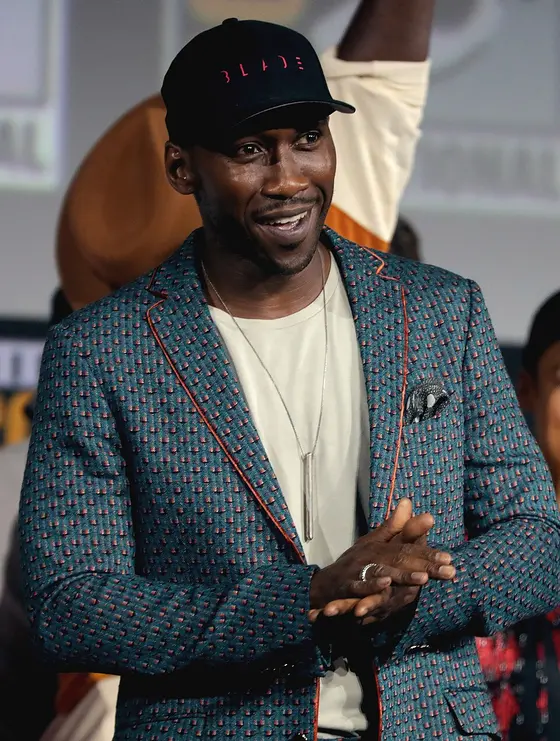
The Achievement
On February 26, 2017, at the 89th Academy Awards, Mahershala Ali won Best Supporting Actor for his role as Juan in Barry Jenkins' film Moonlight. The win made him the first Muslim actor to receive an Academy Award. He was present for approximately 20 minutes of Moonlight's 110-minute runtime, and those 20 minutes were enough to win the Oscar.
Two years later, at the 91st Academy Awards on February 24, 2019, he won again, this time for his portrayal of classical pianist Don Shirley in Green Book. With that second win, he became the only Black actor in Academy history to win two Oscars in the same acting category.
The "first Muslim actor" framing requires one honest footnote. Indian composer A.R. Rahman won two Academy Awards in February 2009 for Slumdog Millionaire, both in music categories. Rahman is a practicing Sunni Muslim, and his wins predate Ali's by eight years. When outlets including CNN, Variety, and the BBC described Ali as "the first Muslim to win an Oscar," they were technically imprecise. The accurate designation is "first Muslim actor," and that is the framing this article uses.
From Oakland to Hollywood: The Road to History
Mahershala Ali was born Mahershalalhashbaz Gilmore on February 16, 1974, in Oakland, California. The name Mahershalalhashbaz comes from the Hebrew Bible (Isaiah 8:1) and is among the longest personal names in scripture. He grew up in Hayward, California, raised by his mother, an ordained Baptist minister. His father left the family when Ali was young.
He studied mass communications at St. Mary's College of California, then earned an MFA in drama from the Tisch School of the Arts at New York University. His early career moved through television: Crossing Jordan (2001), Threat Matrix (2003), The 4400 (2004). The role that brought him to wider attention was Remy Danton in House of Cards (2013-2016). He professionally shortened his name from Mahershalalhashbaz to Mahershala around 2010.
His conversion to Islam came in 1999, through his relationship with Amatus Sami-Karim, who would become his wife in 2013. Her family is Ahmadiyya Muslim, and Ali joined the Ahmadiyya community in 2001. Their daughter, Bari Najma Ali, was born on February 22, 2017, four days before Ali stood at the Oscar podium for the first time.
Juan in Moonlight: The Role That Made History
Juan is an Afro-Cuban drug dealer living in the Liberty City neighborhood of Miami. He finds a young boy named Chiron hiding in an abandoned crackhouse, fleeing bullies, and takes him under his care. He teaches Chiron to swim in the ocean, talks with him about identity and masculinity, and becomes the closest thing to a father figure the boy has ever known.
The moral weight of the character comes from a single fact held in tension throughout the film: Juan is also the man who sells crack cocaine to Chiron's mother. He is simultaneously the most nurturing adult in Chiron's life and partly responsible for his mother's destruction. Barry Jenkins never resolves this tension or asks the audience to excuse it. Juan holds both things at once, and so does the audience.
Ali appears only in the film's first of three acts. After that section ends, Juan never appears again. The performance had to establish everything in roughly 20 minutes and leave an impression strong enough to carry the film's final two-thirds. It did. Moonlight went on to win Best Picture, Best Adapted Screenplay, and Best Supporting Actor at the 89th Academy Awards. The Best Picture announcement itself was chaotic: La La Land was incorrectly called as the winner before the error was corrected. But Ali's win was never in question.
Before the Oscar, Ali swept the precursor awards for the role: the Screen Actors Guild Award, the Critics' Choice Award, the Independent Spirit Award, and awards from major critics' circles across North America.
The SAG Awards Speech: Faith in Public, at the Right Moment
The most significant statement Ali made about his Muslim identity did not happen at the Oscars. It happened at the Screen Actors Guild Awards on January 29, 2017, eight days into the Trump administration and nine days after an executive order had been signed suspending immigration from seven Muslim-majority countries.
After accepting the award, Ali addressed the room directly: "My mother is an ordained minister. I am a Muslim. She didn't do backflips when I called her and told her I converted 17 years ago. But I tell you now, we put things to the side, and I was able to see her."
He then drew a line from his own experience to the character he had played, describing how Juan watched a young man "folding into himself as a result of the persecution of his community" and chose to support him rather than turn away. The speech was broadly covered as an implicit response to the travel ban and to the political climate around Muslim identity in America. He did not name the executive order. He did not name the president. He did not need to. The timing was the statement.
His Oscar acceptance speech three weeks later was quieter and more personal. He thanked his teachers, his director, his cast, and his wife. He closed with "Peace and blessings," the Islamic salutation. He buttoned his jacket at the podium, explaining later that his grandmother would have expected it.
Don Shirley in Green Book: The Second Win
Don Shirley (1927-2013) was an American classical and jazz pianist of Jamaican heritage who held three doctoral degrees and trained at the Leningrad Conservatory. Green Book depicts his 1962 concert tour through the American Deep South, accompanied by his driver and occasional bodyguard Tony "Lip" Vallelonga, with the Negro Motorist Green Book serving as their guide to safe restaurants and lodging along the route.
The role required Ali to appear fluent at the piano across the film. He took weekly lessons with composer Kris Bowers for three months, learning Shirley's arrangements. In the finished film, close-up shots of the keyboard work use Bowers' hands, color-corrected by editors to match Ali's skin tone. The performance beyond the piano work earned Ali the Golden Globe, the SAG Award, the BAFTA, and the Oscar.
At the 91st Academy Awards on February 24, 2019, Ali became the only Black actor ever to win two Academy Awards in the same acting category. The second Black actor overall to win multiple acting Oscars (Denzel Washington won Best Supporting Actor in 1990 and Best Actor in 2002), Ali's double in a single category has no precedent among Black actors in Academy history. Green Book also won Best Picture and Best Original Screenplay at the same ceremony.
The Ahmadiyya Question
The "first Muslim actor" designation carries genuine complexity that a reference site cannot responsibly ignore.
The Ahmadiyya Muslim Community was founded in 1889 in Qadian, British India by Mirza Ghulam Ahmad, who claimed to be the promised Mahdi and Messiah awaited within Islam. The central theological dispute is specific: mainstream Islamic doctrine holds that Muhammad was the final prophet (Khatam an-Nabiyyin, "Seal of the Prophets"). The Ahmadiyya recognition of Ahmad as a prophet-like figure is considered by most Sunni and Shia authorities to constitute apostasy rather than a variant interpretation within Islam.
The legal and institutional consequences in some countries are severe. Pakistan's parliament declared Ahmadis non-Muslims by constitutional amendment in 1974. A 1984 Pakistani law (Ordinance XX) made it a criminal offense for Ahmadis to call themselves Muslim, to refer to their places of worship as mosques, or to perform the call to prayer. The Islamic Fiqh Council in Mecca issued a fatwa the same year confirming the non-Muslim designation. Ahmadis have faced violent persecution in multiple countries; a May 2010 attack on two Ahmadiyya mosques in Lahore killed 86 people.
For the "first Muslim actor" claim, this creates a real editorial question. By the standards of mainstream Islamic jurisprudence and the laws of the world's second-most-populous Muslim country, Ali does not qualify as Muslim. By the standards of the Ahmadiyya community and the practice of Western journalism, he does. CNN, Variety, the Washington Post, and the BBC all used "first Muslim actor to win an Oscar" without qualification in 2017. The Washington Post also ran a separate article noting that "some Muslim countries would deny" the designation.
A Harvard Kennedy School student policy essay addressed the tension directly in a piece titled "Can a Heretic Be a Hero? The Muslim Breakthrough of Mahershala Ali's Oscar Win." The answer that essay reached, and the one this site takes, is that both the achievement and the complexity are part of the historical record. Ali identifies as Muslim, won an Oscar, and did so in a way that was received widely as a Muslim milestone. The theological dispute about who qualifies as Muslim is also real and documented. Reporting one without the other shortchanges readers.
What Came After
In 2019, the New York Times ranked Ali among the 25 greatest actors of the 21st century. Time magazine named him to its 100 Most Influential People list the same year. He received an Emmy nomination for True Detective, Season 3 (2019), in which he played Wayne Hays across three different decades of the character's life.
In July 2019 at San Diego Comic-Con, Marvel Studios announced Ali as the MCU's Blade. As of early 2026, the production has experienced significant delays and creative turnover; its current status is uncertain.
In 2021, Riz Ahmed became the first Muslim nominated for Best Actor in a Leading Role (Sound of Metal, 93rd Academy Awards). That nomination marked a separate milestone from Ali's wins: the distinction between supporting and leading categories in Academy history has its own significance for representation.
Ali's two wins remain the high-water mark for Muslim representation in Academy Award acting history. He achieved them with roles defined by moral complexity rather than comfort: a crack dealer who teaches a boy to swim, a concert pianist navigating segregation. Neither role asked audiences to overlook anything. Both asked them to hold contradiction, which is harder and more honest.
Frequently Asked Questions
Who was the first Muslim actor to win an Oscar?
Mahershala Ali was the first Muslim actor to win an Academy Award. He won Best Supporting Actor on February 26, 2017, at the 89th Academy Awards, for his role as Juan in Moonlight, directed by Barry Jenkins.
Was Mahershala Ali the first Muslim to ever win an Oscar?
No. Indian composer A.R. Rahman won two Academy Awards in 2009 for Slumdog Millionaire (Best Original Score and Best Original Song). Rahman is a practicing Sunni Muslim. Ali was the first Muslim to win in an acting category. The "first Muslim actor" framing is the accurate one, and it is what major outlets including CNN, Variety, and the BBC used when they covered the 2017 win.
How many Oscars has Mahershala Ali won?
Two. Both were Best Supporting Actor. His first was for Moonlight at the 89th Academy Awards (February 26, 2017). His second was for Green Book at the 91st Academy Awards (February 24, 2019). He is the only Black actor to win two Academy Awards in the same acting category.
Is Mahershala Ali Muslim?
Ali identifies as Muslim and belongs to the Ahmadiyya Muslim Community, which he joined in 2001 after converting in 1999. The designation carries genuine complexity: mainstream Islamic authorities and the governments of Pakistan and several other countries classify Ahmadis as non-Muslim. Western news organizations have used the "first Muslim actor" framing broadly. Both his self-identification and the theological dispute around Ahmadiyya status are real and documented parts of the record.
What did Mahershala Ali say about being Muslim at the SAG Awards?
At the SAG Awards on January 29, 2017, nine days after the Trump administration's executive order suspending immigration from seven Muslim-majority countries, Ali said: "My mother is an ordained minister. I am a Muslim. She didn't do backflips when I called her and told her I converted 17 years ago. But I tell you now, we put things to the side, and I was able to see her." The speech was widely covered as a direct response to the political climate around Muslim identity in America at that moment.