The Record
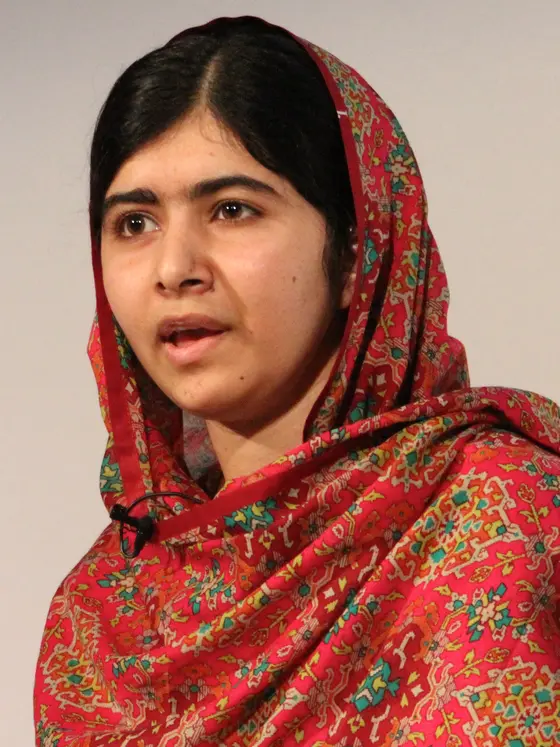
On October 10, 2014, the Norwegian Nobel Committee announced that the Nobel Peace Prize would go to Malala Yousafzai and Kailash Satyarthi. Malala was 17 years old. Born July 12, 1997, she was 17 years and approximately 90 days old at the moment the announcement was made.
That age is the record. Not youngest Muslim Nobel laureate. Not youngest woman. The youngest Nobel Prize recipient across all six categories in 113 years of Nobel Prize history. Guinness World Records certifies it. The previous youngest Nobel Peace Prize laureate was Rigoberta Menchú Tum of Guatemala, who received the award in 1992 at age 33. Malala was nearly half her age.
The record is also a compressed story. She had started the work that led to the Nobel stage six years earlier, at age 11, writing a blog under a pseudonym while the Taliban controlled her valley and threatened to close her school. She was shot in the head for speaking up at 15. At 17, she stood in Oslo.
A Blog Written Under a Pseudonym
In January 2009, Abdul Hai Kakar, a reporter for BBC Urdu, was trying to find someone in Pakistan's Swat Valley willing to write about daily life under Taliban occupation. The Taliban, under commander Maulana Fazlullah, had imposed bans on television, music, girls' education, and women appearing in public without a male escort. Bodies of beheaded police officers were displayed in the town square. Kakar needed a voice from inside that situation.
Malala's father, Ziauddin Yousafzai, suggested his daughter. She was 11 years old. Because of safety concerns, BBC editors required a pseudonym. The name chosen was Gul Makai, Pashto for "cornflower," taken from a heroine in a Pashtun folktale. Kakar explained the choice: he wanted an indigenous, symbolic name that readers across Swat could feel ownership of.
Her first diary entry was posted on January 3, 2009. She wrote 35 entries through early March, describing school closures, the sounds of military helicopters at night, and her family's refusal to leave. "I am afraid," she wrote in one entry. "But I will not stop going to school." The entries were translated into English and attracted international attention. Her identity as Gul Makai was not publicly known at the time.
The blog was three months of a child writing from inside an occupied territory. It became the foundation of everything that followed.
Shooting and Recovery
By 2012, Malala's identity was widely known. She had appeared in a New York Times documentary about girls' education in Pakistan, won Pakistan's National Youth Peace Prize, and given dozens of interviews. The Taliban had issued formal threats against her father and, increasingly, against her directly.
On October 9, 2012, she was 15 and riding a school bus in Mingora after taking an exam. A gunman stopped the bus, asked for Malala by name, and shot her in the head at close range. Two other girls were wounded. The Pakistani Taliban's Maulana Fazlullah claimed responsibility.
Pakistani army doctors recognized the neurological severity immediately. She was airlifted first to a military hospital in Peshawar, then to Rawalpindi, and then flown to Queen Elizabeth Hospital in Birmingham, a facility that specializes in treating military personnel with blast and bullet injuries. By October 17, she had emerged from an induced coma. Surgeons spent months reconstructing the left side of her skull with a titanium plate and restoring her hearing with a cochlear implant. She was discharged on February 8, 2013, after her final surgery on February 3.
She did not return to Pakistan. Her family settled in Birmingham. Within months, she was speaking again.
Islam as the Argument
This is the angle that receives the least coverage and matters most on a site documenting Muslim firsts. Malala does not present her education advocacy as existing in tension with Islam. She presents it as rooted in Islamic teaching, and she makes this argument directly and repeatedly.
"The extremists are afraid of books and pens, the power of education frightens them," she said at the UN in 2013. "Islam says every girl and every boy should go to school. In the Quran it is written, God wants us to have knowledge."
In "I Am Malala," the memoir she co-authored with journalist Christina Lamb in 2013, she describes herself as a devout Muslim who prays five times a day and whose faith was never in conflict with her advocacy. The central argument of her position is precise: it is the Taliban's interpretation of Islam, not Islam itself, that prohibits female education. She quotes the Quran directly. She names specific Quranic verses. She does not abandon the framework; she contests its misuse.
This matters for how the story is understood. A Pakistani Muslim girl from a conservative valley did not fight against her religion to demand education. She fought using her religion, with specific textual citations, against people she believed were misrepresenting it. The record she holds was earned within that framework, not against it.
The Nobel Prize Ceremony
The Nobel Committee's 2014 announcement named both Malala Yousafzai and Kailash Satyarthi "for their struggle against the suppression of children and young people and for the right of all children to education." Committee Chairman Thorbjorn Jagland addressed the deliberate symbolism of the pairing directly: "It is a message to the world that a Hindu and a Muslim, an Indian and a Pakistani, can join in a common struggle for education and against extremism."
Malala was in school when the prize was announced. In chemistry class, specifically. She found out during the lesson.
At the Oslo ceremony on December 10, 2014, her acceptance speech held its focus on children who were not in the room with her:
"This award is not just for me. It is for those forgotten children who want education. It is for those frightened children who want peace. It is for those voiceless children who want change. I am here to stand up for their rights, to raise their voice. It is time to take action so it becomes the last time that we see a child deprived of education."
The Malala Fund and Oxford
In 2013, Malala co-founded the Malala Fund with Shiza Shahid. The organization focuses on secondary education (grades 7 through 12), the stage at which girls most often leave school. In its first decade, partner organizations reached 21.8 million students. In the fiscal year April 2024 through March 2025, the Fund awarded $10.2 million in grants to 57 organizations across 10 countries. Policy wins include a constitutional amendment supporting free basic education in Brazil and the elimination of hidden school fees in Nigeria's Kaduna State.
After the 2021 Taliban takeover of Afghanistan, the Fund expanded its Afghanistan Initiative significantly, developing alternative and digital learning programs for girls banned from secondary school and university. The Fund has also pushed for international legal recognition of what it calls "gender apartheid," a specific legal standard for Afghanistan's systematic exclusion of women and girls from public life.
In 2017, Malala enrolled at Lady Margaret Hall, Oxford University, to study Philosophy, Politics and Economics (PPE). Lady Margaret Hall is the college where Benazir Bhutto, Pakistan's first female Prime Minister, studied in the 1970s. Malala graduated with honours in June 2020. Her announcement on social media said she planned to spend time on "Netflix, reading and sleep." The deliberate normalcy of the statement, from someone who had been shot in the head for going to school eight years earlier, resonated across the world.
In November 2021, she married Asser Malik, who managed the Pakistan Cricket Board's high-performance centre, in a small nikkah ceremony in Birmingham with family present. A formal portrait of her was unveiled at Lady Margaret Hall in February 2026.
The work continues. At 17, she was the youngest person in Nobel history to stand on that stage. At 28, she is still doing the thing that put her there.
Frequently Asked Questions
How old was Malala Yousafzai when she won the Nobel Prize?
Malala was 17 years old when the Nobel Peace Prize was awarded to her on October 10, 2014. Born July 12, 1997, she was 17 years and approximately 90 days old at the time of the announcement. Guinness World Records certifies her as the youngest Nobel Prize winner across all categories in the award's 113-year history.
Why did Malala Yousafzai win the Nobel Peace Prize?
The Norwegian Nobel Committee awarded Malala Yousafzai and Kailash Satyarthi the 2014 Nobel Peace Prize for their struggle against the suppression of children and for the right of all children to education. Malala's advocacy began in 2009 when she wrote a blog for BBC Urdu documenting life under Taliban occupation of the Swat Valley. She continued speaking publicly despite death threats, survived an assassination attempt in 2012, and co-founded the Malala Fund in 2013.
Who shot Malala Yousafzai and why?
On October 9, 2012, a gunman acting on orders from Pakistani Taliban leader Maulana Fazlullah stopped Malala's school bus in Mingora, asked for her by name, and shot her in the head. She was 15 years old. The Taliban had banned girls' education in the Swat Valley and viewed her public advocacy as a direct challenge. Two other girls on the bus were also wounded. Malala was airlifted to Queen Elizabeth Hospital in Birmingham, UK, where she underwent months of surgery including a titanium plate in her skull and a cochlear implant.
What is the Malala Fund?
The Malala Fund is an international non-profit co-founded by Malala Yousafzai and Shiza Shahid in 2013. Its mission is to ensure 12 years of free, safe, and quality education for every girl. The Fund focuses on secondary education, the stage at which girls most often leave school. In its first decade, partner organizations reached 21.8 million students. In the fiscal year April 2024 through March 2025, the Fund awarded $10.2 million in grants to 57 organizations across 10 countries.
Did Malala Yousafzai go to university?
Yes. Malala enrolled at Lady Margaret Hall, Oxford University, to study Philosophy, Politics and Economics (PPE). She graduated with honours in June 2020. Lady Margaret Hall is the same Oxford college where Benazir Bhutto, Pakistan's first female Prime Minister, studied in the 1970s. Malala announced her graduation on social media, saying she planned to spend time on "Netflix, reading and sleep."