The Question of Definition
Ask who was the first Muslim billionaire and you will get three different answers from three credible sources. All three are correct. The question changes depending on which publication you trust, which definition of "billionaire" you apply, and whether inherited sovereignty counts the same as built enterprise.
Here is where the confusion starts. Forbes published its first global billionaires list in 1987. From day one, its methodology explicitly excluded royalty and heads of state whose wealth derived from controlling national resources rather than running businesses. That exclusion shaped everything that followed. The world's richest Muslim in the late 1980s was probably invisible to the most-cited wealth ranking on earth, not because of any oversight, but by design.
There is also a publication error that repeats endlessly. The figure most commonly cited for the Sultan of Brunei's peak wealth, $25 billion, comes from Fortune magazine in 1988, not Forbes. These are two separate publications with different methodologies. Fortune included sovereign wealth. Forbes did not. When writers conflate them, the historical record blurs.
So the honest answer has three parts: one for sovereign wealth, one for Forbes-recognized investment, and one for genuinely self-made enterprise. Each belongs to a different person.
The Sultan of Brunei
Brunei struck oil in 1929 at the Seria field on the northwest coast of Borneo. The country had a population of roughly 30,000 at the time. Within a decade it was the third-largest oil producer in the British Commonwealth. By the 1980s, a tiny nation of roughly 200,000 people was sitting on revenues that made its ruling family inconceivably wealthy.
Hassanal Bolkiah was born on July 15, 1946, the eldest son of Sultan Omar Ali Saifuddien III. He ascended to the throne in 1967 at 21 when his father abdicated, and became Prime Minister when Brunei gained independence from Britain in 1984. The Brunei Investment Agency, founded in 1983, managed the family's petroleum revenues and overseas investments.
By 1988, Fortune magazine estimated Bolkiah's personal wealth at $25 billion, naming him the richest person on earth. Forbes, applying its sovereign-exclusion rule, listed no such figure. The Sultan was simultaneously the world's wealthiest individual by one publication's reckoning and nonexistent by another's.
His wealth did not go smoothly from there. His brother Prince Jefri Bolkiah served as Brunei's Finance Minister and chaired the BIA from 1986 to 1997. Following the 1997 Asian financial crisis, external audits alleged Jefri had embezzled between $14.8 and $16 billion from the BIA. His conglomerate, Amedeo Development Corp, collapsed with $6 billion in debts. The Sultan sued his own brother for $16 billion; the case settled with Jefri surrendering five diamonds worth $200 million, roughly 600 properties, more than 2,000 cars, nine aircraft, 100 paintings, and multiple boats. It stands as one of the most dramatic destructions of sovereign wealth outside of war.
Current estimates put the Sultan's net worth somewhere between $28 and $50 billion, a wide range that reflects the genuine opacity of sovereign wealth accounting. He is the world's longest-reigning current monarch.
Prince Alwaleed bin Talal
Prince Alwaleed bin Talal is the most complicated case in this conversation. He is royalty: a grandson of King Abdulaziz ibn Saud, the founder of Saudi Arabia. But his wealth was built through active investment decisions rather than passive inheritance of a fixed fortune. The distinction matters.
He earned a bachelor's degree in business administration from Menlo College in California in 1979, then a master's in social sciences from Syracuse University in 1985. His starting capital came from his father in stages. A first loan of $30,000 produced little. A second loan of $300,000 stalled. His father eventually transferred the deed to a house; Alwaleed mortgaged it for $600,000. That became his real working capital. He founded Kingdom Holding Company in 1980.
The trade that made him famous came in 1991. In late 1990 he had quietly purchased 4.9 percent of Citicorp's existing common shares on the open market for $207 million at $12.46 per share. In February 1991, he purchased an additional $590 million in preferred shares. Citicorp was in serious distress. Most investors were selling. Alwaleed held. By 2005 that combined investment of roughly $797 million was worth approximately $10 billion. Time magazine called him the "Arabian Warren Buffett."
He followed a similar contrarian pattern throughout the 1990s and 2000s: Four Seasons Hotels, Apple Computer in 1997 when Apple nearly failed before Steve Jobs returned, Twitter, Saks Fifth Avenue, Fairmont Hotels, News Corp, and others. He entered distressed assets and held long-term while others fled.
Forbes has listed him among the world's wealthiest since the mid-1990s. At his peak, around 2005 to 2013, his net worth was estimated between $20 and $30 billion. In 2017, he was detained at the Ritz-Carlton hotel in Riyadh during Saudi Arabia's anti-corruption sweep and released in 2018 after reportedly reaching a financial settlement with the government. Some analysts estimated the wealth impact at more than $6 billion.
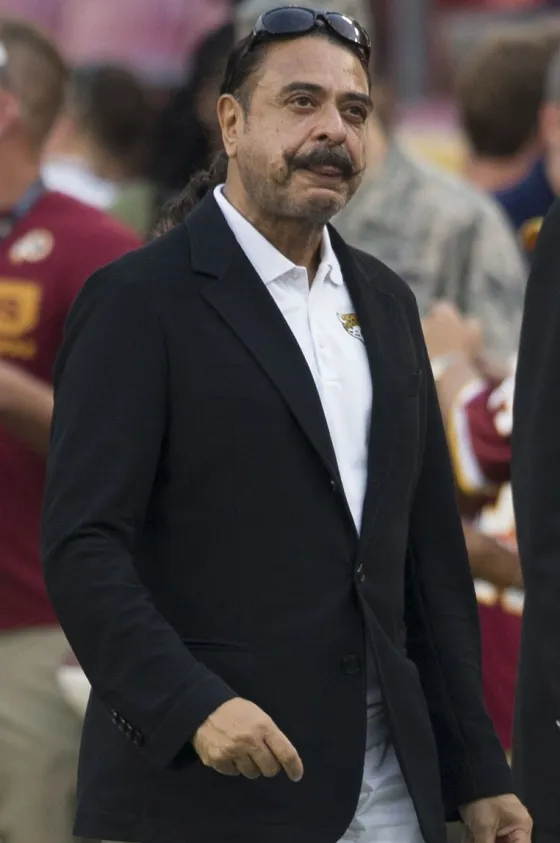
Shahid Khan: Self-Made in the West
In July 1967, a 16-year-old from Lahore, Pakistan, flew alone to the United States with $500 in his pocket. His first night cost $2 at the YMCA near the University of Illinois. His first job paid $1.20 an hour washing dishes.
That teenager was Shahid Khan. He graduated from the University of Illinois in 1971 with a degree in industrial engineering, working at Flex-N-Gate throughout his studies and rising to engineering director by graduation. In 1978 he founded Bumper Works to manufacture bumpers for customized pickup trucks. In 1980 he purchased Flex-N-Gate itself from its founder, Charles Gleason Butzow, using his savings plus $50,000 in additional financing and merging it with Bumper Works.
What followed is a straightforward story about execution over four decades. Revenues grew from $17 million in the early 1980s to $2 billion by 2010 to $8.89 billion by 2020. The company now employs more than 25,000 people across 69 plants in the United States, China, Argentina, Spain, France, Germany, Mexico, and Canada. Flex-N-Gate is one of the largest privately held automotive components suppliers in the world.
Khan purchased the Jacksonville Jaguars NFL franchise in 2012 for $770 million, becoming the first member of an ethnic minority to own an NFL team. He acquired Fulham FC in England's Premier League in 2013 for an estimated £150 to £200 million. His son Tony Khan is the lead investor and founder of All Elite Wrestling.
As of January 2025, Khan's net worth stands at approximately $13.3 billion. Forbes ranked him 55th on the Forbes 400 richest Americans in 2024 and 167th globally. He is the wealthiest auto parts magnate in the world.
His claim to a specific kind of "first" is clear: no royal connections, no family business, no inherited capital, no national oil revenues. He arrived with $500 and built from there. Among Muslim billionaires in the Western sense, that story is unmatched.
Beyond Oil: Other Self-Made Muslim Billionaires
The story of Muslim wealth is not a Gulf oil story. It runs through Lagos, Paris, and Dubai as much as Riyadh.
Aliko Dangote of Nigeria is Africa's wealthiest person. Born in 1957 to a prominent Kano trading family (his great-grandfather was said to be West Africa's wealthiest man at his death in 1955), Dangote started his own enterprise in 1981 with a $500,000 loan from his uncle. He traded cement and agricultural commodities, then moved into manufacturing. He built Dangote Group into a conglomerate spanning cement, sugar, and flour that eventually made him Nigeria's first Forbes-listed billionaire in 2008 at $3.3 billion. His net worth as of 2025 is estimated between $23 and $32 billion, a range reflecting ongoing valuation uncertainty around his $20 billion Dangote Oil Refinery, which began operations in early 2024 and is sub-Saharan Africa's largest.
Mohed Altrad's story is almost entirely unknown outside France. Born around 1948 to a Bedouin tribe in Syria, he was orphaned in infancy and raised by his grandparents. He passed his baccalaureate, received a small government scholarship to study in France, earned a degree in computer science and management from Paris Dauphine, and eventually bought a bankrupt scaffolding manufacturer in the south of France in 1985. He built Altrad Group into a construction services business generating $2.6 billion in annual revenue with 65,000 employees across more than 50 countries. He was named EY World Entrepreneur of the Year in 2015. His net worth is approximately $5 billion.
These stories span three continents and three very different paths to wealth. What they share is that none of them involve oil sovereignty or royal inheritance. They are manufacturing, construction, and distribution businesses built through decades of operational work.
Islamic Finance and How Muslim Billionaires Actually Made Money
There is a productive irony in this story. Islamic finance is a $5 trillion global industry as of 2024, growing at 12 percent year over year. It is built on the prohibition of interest (riba), the prohibition of excessive speculation (gharar), and restrictions on investing in alcohol, gambling, and other sectors. The sukuk market alone, the Islamic equivalent of bonds, stood at approximately $971 billion in 2024 and is projected to reach $1.5 trillion by 2028.
None of the major Muslim billionaires in this article built their wealth through Islamic finance structures.
Alwaleed's landmark 1991 Citicorp preferred-share investment paid 11 percent interest. That is riba by any Islamic finance definition. Dangote used a conventional uncle's loan and conventional industrial financing throughout his expansion. Khan built Flex-N-Gate through standard automotive industry credit structures. The Sultan of Brunei's wealth runs through oil revenues and conventional overseas investment vehicles.
This is not a criticism of any of these individuals. It is an accurate description of how large-scale wealth was built in the twentieth century. Islamic finance as an institutional industry largely serves hundreds of millions of consumers and institutions seeking Sharia-compliant savings accounts, home purchases, and corporate financing. It operates in parallel to the personal financial decisions of its wealthiest adherents, not as their blueprint.
Standard Chartered projects Islamic finance assets will reach $7.5 trillion by 2028. The industry is growing because of consumer demand and regulatory frameworks in Malaysia, Saudi Arabia, the UAE, and increasingly in the UK and Southeast Asia. That growth will create new categories of wealth built on Sharia-compliant structures. The generation of Muslim billionaires who emerge in the 2030s may tell a very different story about how their money was made.
Frequently Asked Questions
Who was the first Muslim billionaire?
There is no single answer. The Sultan of Brunei, Hassanal Bolkiah, was cited by Fortune magazine in 1988 as the world's richest person at $25 billion, but Forbes excluded him because his wealth derived from sovereign oil revenues, not business enterprise. Prince Alwaleed bin Talal is widely regarded as the first Muslim to appear on Forbes as a billionaire through his own investment activity. Shahid Khan, who arrived in the US in 1967 with $500 and built Flex-N-Gate into an $8.89 billion revenue company, is the strongest case for the first genuinely self-made Muslim billionaire.
Why wasn't the Sultan of Brunei on the Forbes billionaires list?
Forbes has excluded royalty and heads of state from its billionaires list since the first global edition in 1987. The methodology distinguishes wealth built through business enterprise from wealth derived from controlling a nation's natural resources. The Sultan's fortune flows from Brunei's oil revenues managed through the Brunei Investment Agency, which Forbes classifies as sovereign wealth rather than personal enterprise. This is a deliberate policy choice, not an oversight.
How much did Alwaleed actually invest in Citicorp?
Approximately $797 million in total. He purchased $207 million in open-market shares in late 1990, then an additional $590 million in preferred shares in February 1991. Many sources cite only the preferred-share figure. By 2005 the full investment had grown to approximately $10 billion.
Who is the richest self-made Muslim in the world today?
As of 2025, strong candidates include Aliko Dangote of Nigeria (estimated $23-32 billion, founder of Dangote Group and Africa's largest oil refinery) and Shahid Khan of the United States (approximately $13.3 billion, founder of Flex-N-Gate and owner of the Jacksonville Jaguars). Both built their wealth through business rather than inheritance or oil sovereignty.
Did Muslim billionaires build their wealth through Islamic finance?
No. The major Muslim billionaires built their fortunes through conventional financial structures. Alwaleed's Citicorp preferred shares paid 11 percent interest. Dangote used conventional loans. Khan built Flex-N-Gate through standard industrial financing. The $5 trillion Islamic finance industry is a parallel institutional system serving consumers and corporations, not the personal investment framework of the world's wealthiest Muslims.